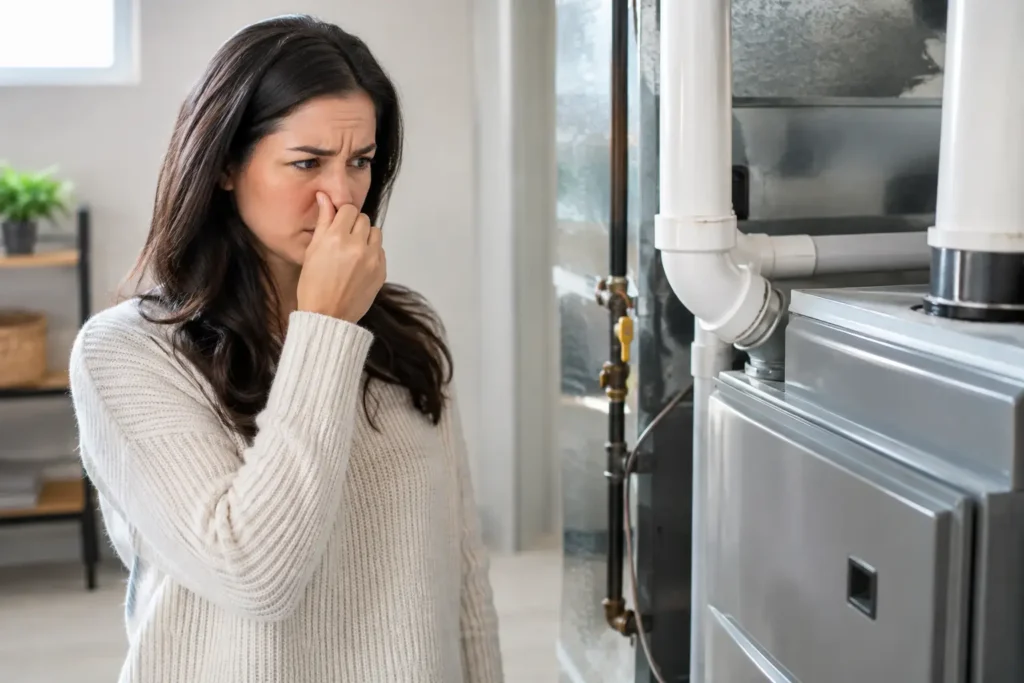
A furnace gas smell is not something to troubleshoot by trial and error. Natural gas and propane are treated with a sulfur-like odorant so leaks can be detected, often described as rotten eggs, sulfur, or spoiled cabbage. If that smell is strong, persistent, or spreading through the building, treat it as a possible gas leak first and a furnace repair issue second.
The safest response is simple: get people and pets out, avoid anything that could create a spark, and call for help from a safe location. A licensed HVAC and gas professional can identify whether the furnace is the source, but the gas utility or emergency services may need to make the area safe before anyone works on the equipment.
What to do when you smell gas near a furnace
If you smell gas inside your home, rental property, or commercial space, leave the area promptly. Do not wait to see whether the smell fades after the furnace shuts off. Gas can collect in enclosed spaces, and even a small ignition source can be dangerous.
Follow these steps:
- Do not turn lights, appliances, thermostats, fans, or breakers on or off. Do not plug in or unplug anything.
- Do not smoke, light a match, use a lighter, or operate a vehicle near the building.
- Get everyone outside and move away from the structure. If it can be done without delaying your exit, leave exterior doors open behind you.
- Call your gas utility’s emergency number or emergency services from outside, not from inside the building. Do not re-enter until the area has been cleared.
Do not try to locate the leak with a flame, spray chemicals around fittings, remove furnace panels, or turn gas valves unless emergency responders or your gas utility specifically instruct you to do so. Those actions can make a hazardous situation worse.
For landlords and property managers, the same rule applies even when a tenant reports only a faint odor. Advise occupants to leave if the smell is noticeable or ongoing, document the report, and arrange emergency assessment. A tenant should never be expected to determine whether a gas odor is serious.
Not every furnace odor is a gas leak
A brief odor at the beginning of a heating cycle can have other causes. Dust on the heat exchanger or burners may create a dry, burning smell after the furnace has been off for months. A dirty filter, debris near a register, or an overheated motor can also create odors that homeowners may mistake for gas.
Still, a true gas odor has a distinctive sulfur or rotten-egg character. If you are unsure which smell you are noticing, make the cautious choice. Leave the area if the odor is strong or you feel unwell, then call from outside for guidance.
Some furnace conditions deserve prompt service even when there is no obvious gas-leak smell. These include delayed ignition with a bang or boom, repeated clicking before startup, yellow or wavering burner flames, soot around the furnace, a furnace that repeatedly shuts down, or headaches and nausea that occur while heating equipment runs. These symptoms can point to combustion, venting, ignition, or equipment problems that require qualified diagnosis.
Why the smell may appear only when the furnace runs
When the thermostat calls for heat, the furnace starts a sequence: the inducer motor runs, safety switches verify venting, the igniter heats or sparks, the gas valve opens, and the burners light. A problem at any point can create an odor or unsafe operating condition.
For example, a delayed ignition can allow a small amount of gas to build up before the burners light. A failing igniter, dirty burner ports, incorrect gas pressure, or a malfunctioning gas valve can contribute to this issue. A damaged vent or blocked exhaust route may also affect how combustion gases move through the system.
The source may not be the furnace at all. A nearby water heater, fireplace, range, clothes dryer, boiler, outdoor meter, or gas piping connection can produce a similar smell. That is why a proper inspection should consider the full gas system rather than assuming the furnace is responsible.
Propane requires particular caution because it can settle in low areas such as basements, crawl spaces, or near floor drains. Natural gas generally rises, but either fuel can create a serious hazard in an enclosed building. The behavior of the gas does not change the first step: get out and call from a safe location.
Carbon monoxide is different from a gas smell
Carbon monoxide is a separate concern. It is colorless and odorless, so you cannot rely on your nose to detect it. A carbon monoxide alarm is the warning device that can alert occupants to dangerous levels caused by incomplete combustion or venting problems.
If a carbon monoxide alarm sounds, move everyone outside immediately and call emergency services from a safe place. Do not silence the alarm and go back to sleep, and do not assume opening a window solves the problem. The building and its fuel-burning equipment need to be assessed before it is occupied again.
Every home with a gas furnace, fireplace, boiler, water heater, or attached garage should have working carbon monoxide alarms in appropriate locations. Test alarms regularly and replace units according to the manufacturer’s service-life instructions. Smoke alarms and carbon monoxide alarms serve different purposes, so one does not replace the other.
What a licensed technician checks after the area is safe
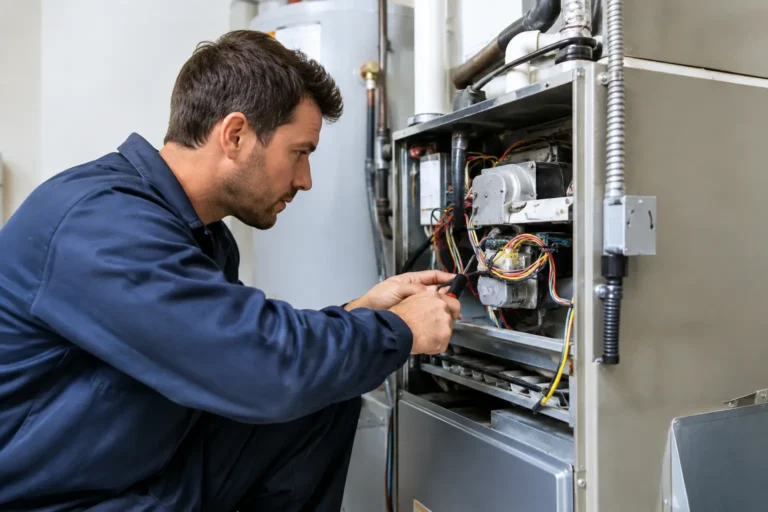
Once the gas utility or emergency responders have confirmed it is safe to enter, a licensed technician can inspect the furnace and connected gas equipment. The goal is not merely to make the odor disappear. It is to identify the source, correct the cause, and verify safe operation.
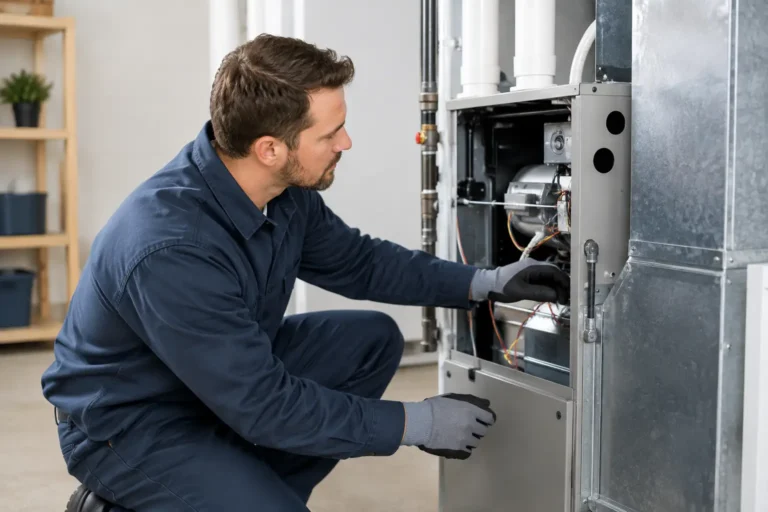
A professional assessment may include checking accessible gas piping and fittings, testing gas pressure, inspecting the gas valve and burners, examining the ignition sequence, confirming venting and combustion air, and looking for signs of heat-exchanger or condensate issues. The technician should also verify safety controls and run the furnace through a complete heating cycle after repairs.
The repair may be minor, such as cleaning burners or replacing a worn igniter. It may also involve repairing gas piping, correcting venting, replacing a failed control, or recommending replacement when an older furnace has recurring combustion or safety concerns. The right solution depends on the equipment condition, repair history, efficiency, and the nature of the fault.
Ask for a clear explanation of what was found, what work is recommended, and what the price includes before authorizing non-emergency repairs. If replacement is the safer long-term option, request an estimate that compares efficiency, warranty coverage, installation scope, and any available energy-upgrade incentives.
Preventing future gas-odor calls
Annual furnace maintenance helps catch problems before the first cold spell puts the system under heavy demand. Service should include combustion-related checks, burner and ignition inspection, filter review, condensate drain inspection where applicable, and confirmation that the venting system is intact.
Keep the area around the furnace clear of storage, paint, gasoline, cleaners, and other combustible materials. Replace filters on schedule, keep exterior intake and exhaust terminations clear of snow and debris, and never block return-air grilles or equipment access panels. These habits will not prevent every failure, but they support safe airflow and make service issues easier to spot.
For property managers, a planned maintenance schedule is usually less disruptive than responding to a no-heat or gas-odor emergency during a busy winter period. It also creates a record of inspections and repairs for multi-unit and commercial properties.
FlameCo Heating Services provides licensed furnace and gas-equipment service for homeowners, landlords, and property managers across Maple Ridge, Metro Vancouver, and the Lower Mainland. When a gas concern has been cleared for entry, qualified service can determine whether the furnace, another appliance, or the gas piping needs repair.
A gas smell is one of the few household warning signs that deserves immediate caution, even when it turns out to be a minor repair. Trust the smell, move to safety, and let qualified professionals determine what is happening before you restart the heat.