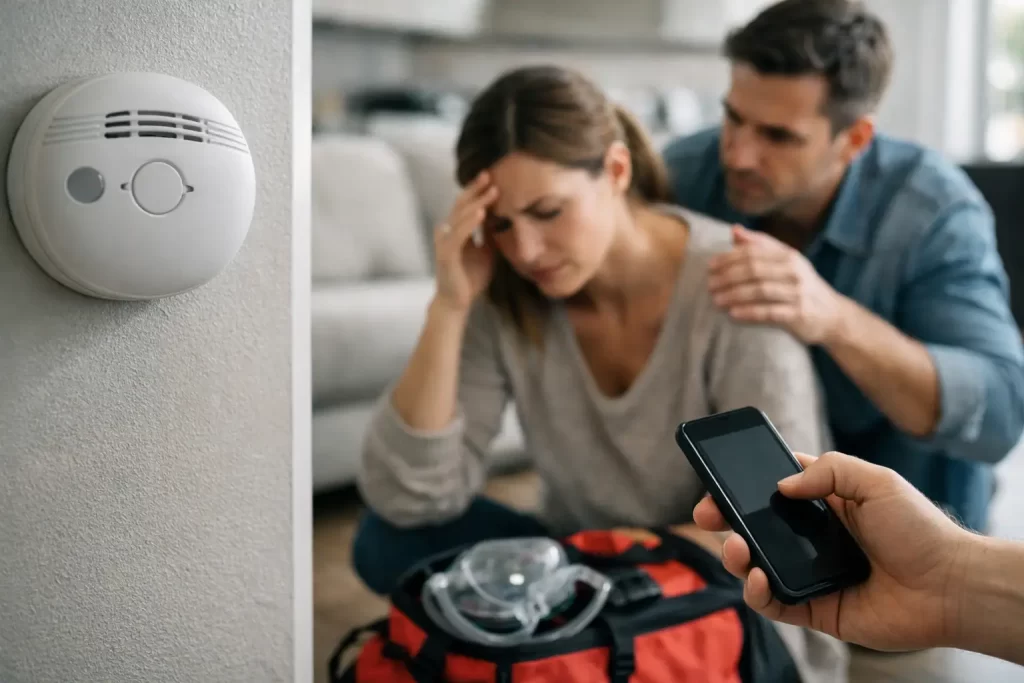
A furnace that runs but leaves people in the home with headaches, nausea, dizziness, or unusual fatigue is not a comfort problem to wait out. Carbon monoxide can build up without a smell, color, or visible warning, particularly when a fuel-burning appliance is damaged, poorly vented, or operating in an enclosed area. Treat a sounding carbon monoxide alarm or suspected exposure as an urgent safety issue.
What Carbon Monoxide Is and Why It Is Dangerous
Carbon monoxide, often called CO, is a gas created when fuels such as natural gas, propane, oil, wood, charcoal, or gasoline do not burn completely. It can come from furnaces, boilers, fireplaces, gas water heaters, ranges, generators, vehicles, and other combustion equipment.
The danger is that CO reduces the blood’s ability to carry oxygen. A person may feel sick, confused, or sleepy before they understand what is happening. High levels can cause loss of consciousness and can be fatal. Because the gas has no reliable odor, you cannot depend on your sense of smell to identify it.
In Metro Vancouver and the Lower Mainland, cold snaps can put older furnaces, fireplaces, boilers, and water heaters under heavier demand. Closed windows, tightly sealed homes, blocked exterior vents, and deferred maintenance can add to the risk. The right response is not to guess which appliance is responsible. Get everyone to fresh air and have the system assessed by a qualified professional.
Carbon Monoxide Symptoms Can Be Easy to Misread
Early symptoms can look like the flu, food poisoning, a migraine, or simple exhaustion. Common signs include headache, dizziness, weakness, nausea, vomiting, chest discomfort, confusion, and shortness of breath. Symptoms may become more serious as exposure continues.
Pay attention to the pattern. If several people in the building feel unwell at the same time, symptoms improve when they leave, or people feel sick only while a furnace, fireplace, or other gas appliance is operating, act immediately. Pets may also appear weak, unsteady, or unusually sleepy.
Do not use symptoms as a test for safety. Children, older adults, pregnant people, and anyone with heart or breathing conditions may be affected differently or sooner. A detector alarm, a suspected gas-combustion issue, or any possible CO exposure deserves a prompt response even if no one feels ill.
What to Do When a CO Alarm Sounds
Leave the building right away and bring everyone with you, including pets. Move to fresh air and call 911 or the local fire department from outside if there are symptoms, anyone has collapsed, or you believe there may be a dangerous concentration of carbon monoxide. Follow emergency responders’ instructions and seek medical care as directed.
Do not reenter the property to open windows, reset the detector, turn appliances off, or collect belongings. Avoid switching lights or appliances on and off. Do not start a vehicle in an attached garage. Once emergency personnel say it is safe, arrange for a licensed heating and gas professional to inspect the likely source before putting fuel-burning equipment back into service.
A low-battery chirp is different from an alarm pattern, but never assume that is the issue unless you have checked the detector manufacturer’s instructions. If there is uncertainty, treat it seriously. Replacing a battery may stop a chirp, but it does not explain an actual CO alarm.
Where CO Problems Commonly Start
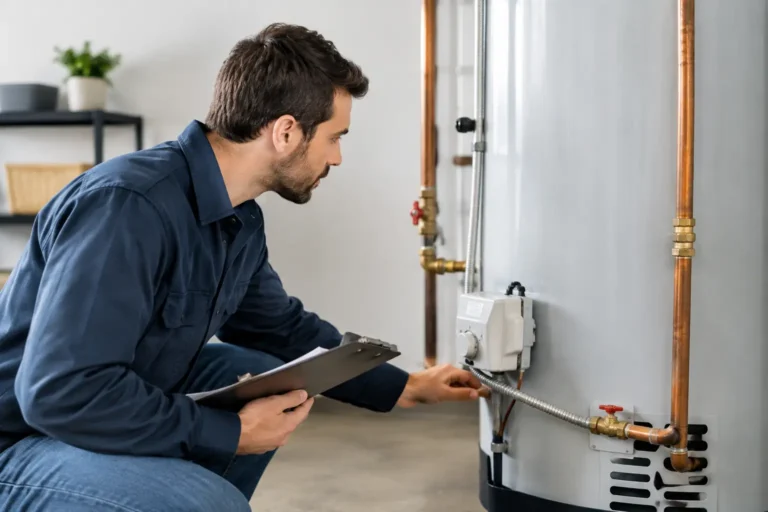
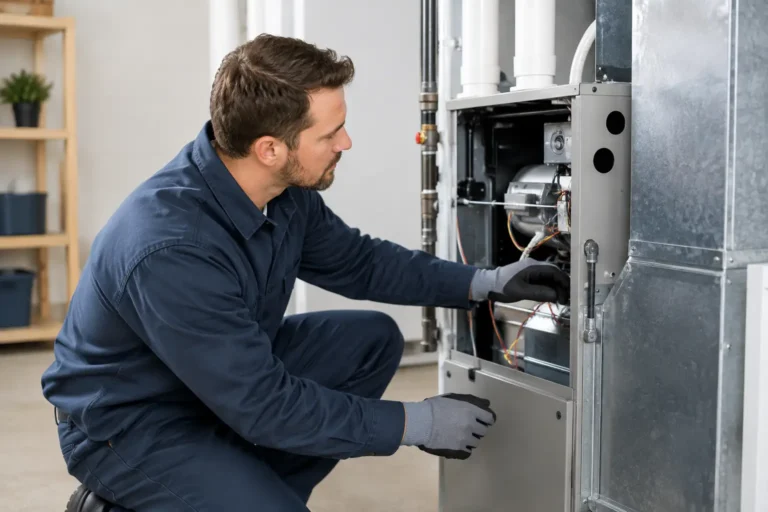
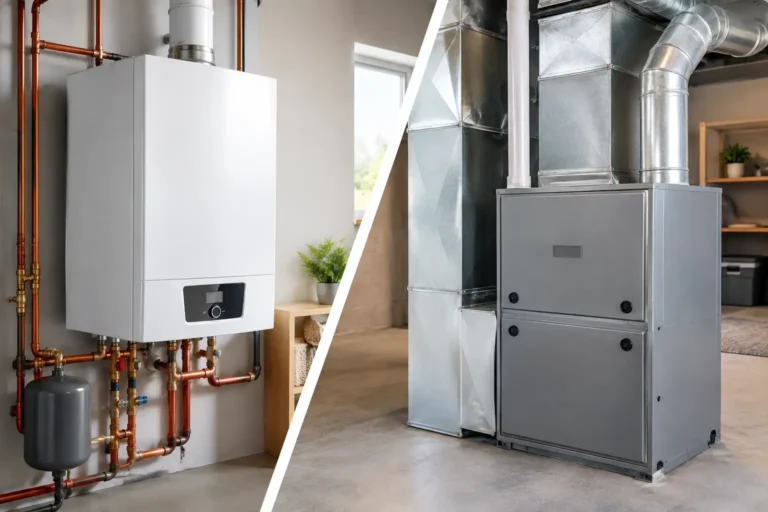
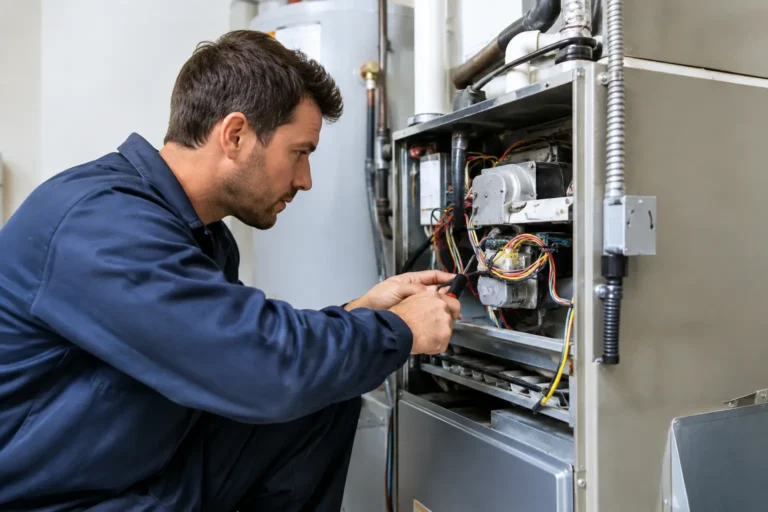
A carbon monoxide concern does not automatically mean a furnace has failed, but combustion appliances and their venting systems should be inspected. Common causes include a cracked heat exchanger, a blocked flue or chimney, disconnected vent piping, damaged seals, poor draft, burner problems, and insufficient combustion air.
A furnace or boiler may continue heating even when a serious issue is developing. Yellow or flickering burner flames, excessive moisture on windows, soot around an appliance, rust on vent pipes, and recurring pilot-light problems are all reasons to schedule service. They are not proof of CO on their own, but they should not be ignored.
Fireplaces and gas water heaters also need attention. A chimney blocked by debris, a vent termination covered by snow or vegetation, or an exhaust path altered during renovations can prevent combustion gases from leaving as designed. In multifamily properties, one affected mechanical room or venting route can have consequences beyond a single suite.
Portable equipment creates another preventable risk. Never run a generator, charcoal grill, gas-powered pressure washer, or gasoline-powered vehicle inside a home, garage, crawlspace, or near doors, windows, and air intakes. Opening a garage door does not make an attached garage safe for a running vehicle.
Install Carbon Monoxide Detectors in the Right Places
Working CO alarms give households an early warning when they cannot see or smell the hazard. Follow the detector manufacturer’s placement instructions and all applicable local building requirements. As a practical baseline, install alarms on every level of the home and outside each sleeping area. Larger homes, homes with bedrooms on separate floors, and properties with multiple fuel-burning appliances may need additional coverage.
Do not place a detector where steam, cooking smoke, direct airflow, extreme heat, or bathroom humidity will interfere with performance. A licensed technician can help identify sensible locations when mechanical equipment is in a utility room, garage-adjacent area, basement, or shared building space.
Test alarms according to the manufacturer’s directions, replace batteries when required, and replace the entire unit at the end of its rated service life. Many units need replacement after five to 10 years, depending on the model. Check the label rather than assuming a detector that beeps during a button test can still accurately sense CO.
Maintenance Is Prevention, Not a Substitute for Alarms
Annual service helps identify venting, ignition, burner, and combustion concerns before they become emergency calls. A proper furnace, boiler, fireplace, or water-heater appointment should look beyond whether the equipment turns on. It should include an assessment of safe operation, visible venting condition, and signs that require repair or further testing.
Maintenance does not guarantee that an unexpected failure will never occur, especially with aging equipment. It does give property owners a chance to address worn components, corrosion, improper venting, and performance problems on a planned schedule rather than after a no-heat call or alarm event.
For landlords and property managers, document service visits and respond quickly when tenants report headaches, alarms, soot, strange appliance behavior, or heating problems. Do not ask occupants to disable a detector or continue operating equipment while the cause is unknown. Clear communication and timely inspection protect tenants and reduce disruption.
When Repair Is Enough and When Replacement Makes More Sense
The right decision depends on the appliance’s age, condition, repair history, and the nature of the fault. A vent connection or ignition issue may be repairable. A severely corroded unit, unsafe heat exchanger, failing vent system, or repeatedly unreliable appliance may call for replacement instead.
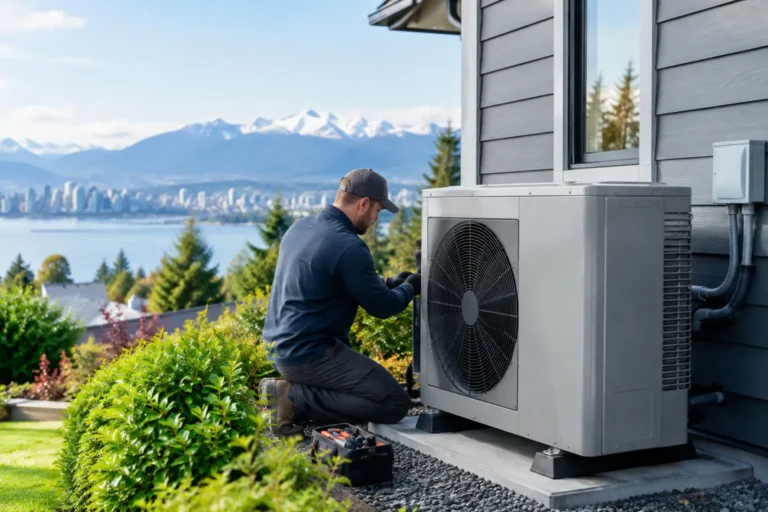
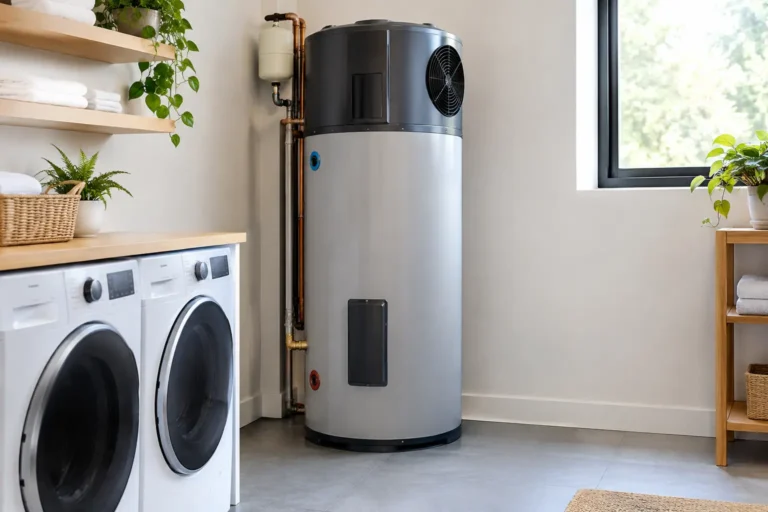
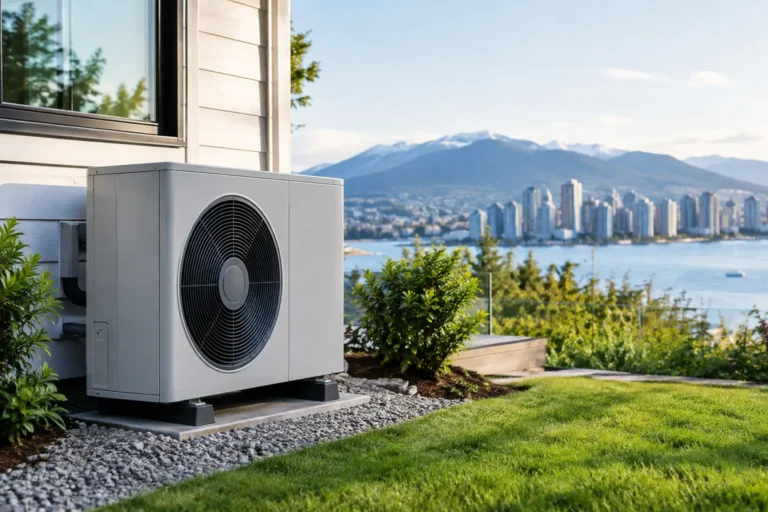
A qualified contractor should explain the finding in plain language, outline the safe options, and give clear pricing before work starts. If a replacement is recommended, ask how the new equipment will be sized, vented, permitted, and commissioned. For homeowners considering broader upgrades, a heat pump or heat-pump water heater may also be worth discussing alongside available government incentive and rebate options.
FlameCo Heating Services provides licensed, bonded, and insured heating and gas-service support for homeowners and property managers across Maple Ridge, Metro Vancouver, and the Lower Mainland. When carbon monoxide is suspected, the priority is simple: protect the people in the building first, then have the appliance and venting system properly diagnosed before normal operation resumes.
A CO alarm is not an inconvenience to silence. It is a warning to give your household the benefit of the doubt, step outside, and get qualified help.