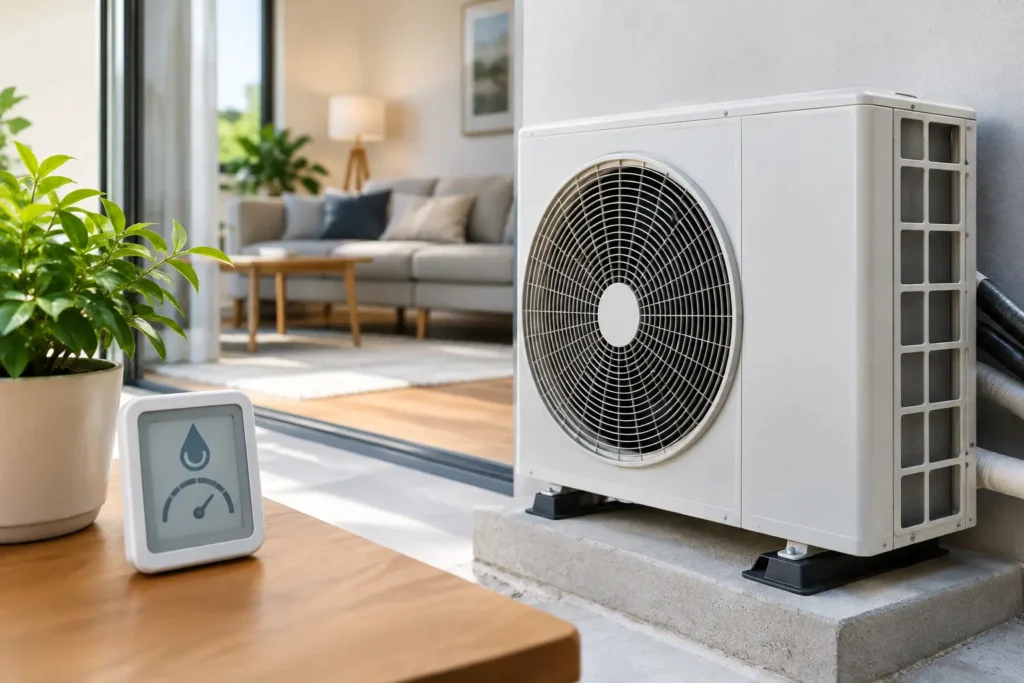
A sticky home can feel uncomfortable even when the thermostat says the temperature is right. So, does a heat pump dehumidify? Yes, but mostly when it is running in cooling mode. Whether it removes enough moisture for your home depends on the equipment type, its size, thermostat settings, airflow, and the source of the moisture.
For homeowners and property managers in Metro Vancouver and the Lower Mainland, that distinction matters. Our mild, damp climate can leave rooms feeling clammy, encourage window condensation, and make basements or ground-level suites harder to manage. A heat pump can be part of the answer, but it is not automatically a whole-home dehumidifier.
Does a heat pump dehumidify while cooling?
When a heat pump runs in cooling mode, it works much like a central air conditioner. Warm indoor air passes over the cold indoor coil. As that air cools, water vapor condenses on the coil and drains away through the condensate line.
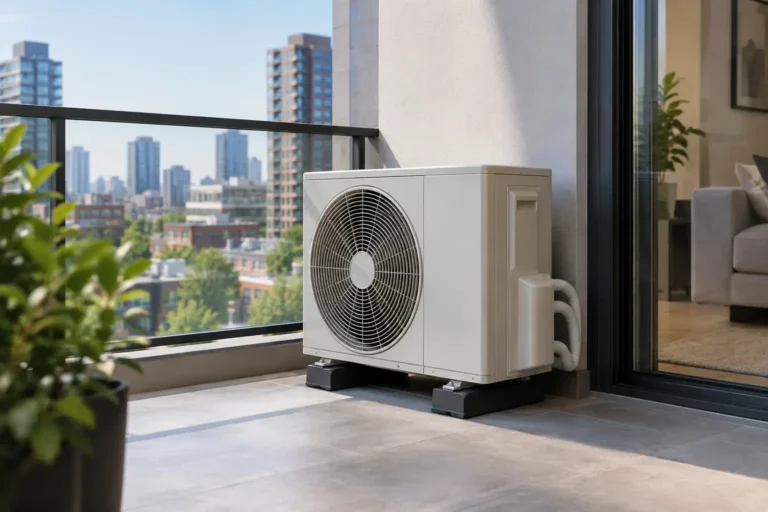
That is real dehumidification. If you have ever seen water draining from an outdoor AC or heat-pump condensate line during warm weather, you have seen the system removing moisture from indoor air.
A properly operating system lowers both temperature and humidity during a cooling cycle. Longer, steady cycles generally remove more moisture than frequent short cycles. That is why a home can reach the set temperature but still feel damp if the equipment shuts off too quickly.
The amount of moisture removed is affected by several connected factors: outdoor humidity, indoor temperature, insulation and air leakage, how many people occupy the space, cooking and showering habits, and whether doors or windows are left open. A heat pump is not designed around one fixed number of pints removed per day. Its moisture removal changes with operating conditions.
Heating mode is different
In heating mode, a heat pump does not normally dehumidify the air inside your home. The indoor coil becomes warm, so it does not create the cold surface needed to condense and drain moisture from indoor air.
The outdoor portion of the system may form frost in cold, damp conditions and periodically enter a defrost cycle. That is part of normal heat-pump operation, but it does not mean your indoor air is being dried out.
This difference catches many homeowners off guard. A heat pump may keep a home warm efficiently through a Lower Mainland winter while the indoor humidity remains high. If moisture is entering through a damp crawl space, an unvented dryer, a plumbing leak, poor bathroom ventilation, or frequent indoor clothes drying, heating alone will not solve it.
Why a heat pump may not control humidity well
A heat pump can be working properly and still leave humidity concerns unresolved. The most common reason is that the system is not running long enough in cooling mode. An oversized unit cools a space quickly, satisfies the thermostat, and turns off before it has had time to remove much moisture.
Airflow can also change the result. If the blower speed is too high for the cooling setup, air may move across the coil too quickly for effective moisture removal. Dirty filters, blocked returns, a dirty coil, low refrigerant, or a drainage problem can also reduce performance. These are service issues worth addressing, not problems to work around by constantly lowering the thermostat.
Thermostat settings matter as well. Setting the fan to run continuously can sometimes reintroduce moisture into the home. After a cooling cycle ends, moisture remains on the indoor coil. A continuously running fan may blow some of that moisture back into the air before it drains away. In many homes, the Auto fan setting supports better humidity control.
Ductless mini-splits bring another variable. They can dehumidify effectively in cooling mode because they operate at variable speeds, but placement matters. A wall-mounted unit can improve conditions in its immediate zone while a closed bedroom, basement, or distant room stays humid. One indoor head cannot always manage moisture throughout an entire floor plan.
Dry mode can help, with limits
Many ductless heat pumps and some advanced central systems offer a Dry or dehumidification mode. This setting usually adjusts compressor and fan operation to favor moisture removal over fast temperature reduction.
Dry mode can be useful on mildly warm, humid days when the home feels clammy but does not need much cooling. It is not a universal fix, however. Performance varies by model, and the setting may still cool the room somewhat. If the home is already cool and damp, running the system in Dry mode may make occupants uncomfortable before it removes enough moisture.
For a rental property, office, or multi-unit building, relying on occupants to choose the right mode is not always practical. A system assessment can identify whether the issue is equipment setup, ventilation, drainage, building moisture, or a need for dedicated humidity control.
When a dedicated dehumidifier is the better choice
A dedicated dehumidifier is usually the better tool when moisture is a regular problem without a cooling demand. Basements, crawl-space-adjacent rooms, laundry areas, storage spaces, and lower-level suites are common examples.
Unlike a heat pump in cooling mode, a dehumidifier is built to remove moisture while adding a small amount of heat back into the space. That trade-off can be worthwhile when preventing musty odors, mold conditions, condensation, and damage to finishes matters more than keeping the room cooler.
Whole-home dehumidifiers can be added to compatible ducted HVAC systems. They are often a strong option for larger homes, properties with recurring window condensation, or buildings where a portable unit would be inconvenient to empty and maintain. A properly installed system drains automatically and uses a humidistat to maintain a selected indoor humidity level.
Portable units are less expensive upfront and can help with a localized problem, but they require regular cleaning and drainage. If a portable dehumidifier runs constantly, fills rapidly, or cannot keep humidity down, treat that as a warning sign. There may be a larger moisture source that needs repair or ventilation improvements.
What indoor humidity level should you aim for?
For many homes, an indoor relative humidity range of about 30% to 50% is comfortable. During colder weather, the right level may need to be lower to reduce condensation on windows and exterior walls. The best target depends on the home’s windows, insulation, air sealing, and outdoor temperature.
Humidity above 60% for extended periods can support mold growth and dust mites. Signs worth acting on include persistent condensation, peeling paint, a musty smell, swollen wood flooring, damp closets, or mildew around windows and bathroom ceilings.
Too little humidity can also be uncomfortable, causing dry skin, static electricity, and irritated sinuses. The goal is controlled humidity, not the driest possible air. A simple hygrometer in the problem area gives you a clearer picture than guessing based on how the room feels.
Start with the moisture source
Before replacing a heat pump or adding equipment, look at why the moisture is there. Bathroom and kitchen exhaust fans should vent outdoors and actually move air. Dryer vents need to be connected, clean, and routed correctly. Plumbing leaks, roof leaks, wet crawl spaces, and poor grading can introduce more moisture than any comfort system should be expected to handle.
Ventilation is especially relevant in tightly sealed homes. Fresh-air systems can improve air quality, but they must be selected and set up correctly for the building and climate. Exhaust-only ventilation, balanced ventilation, and heat-recovery equipment each have different effects on moisture and comfort.
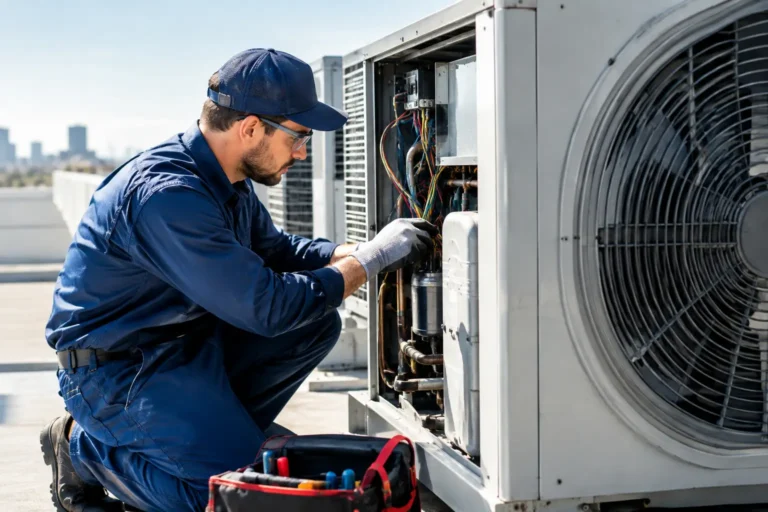
A qualified HVAC technician can check the heat pump’s cooling performance, drainage, refrigerant operation, filter condition, airflow, and controls. If the system is undersized, oversized, poorly configured, or nearing replacement age, you can then compare repair and upgrade options with clear costs. Energy-efficient heat-pump upgrades may also qualify for available government incentive or rebate pathways, depending on the equipment and current program rules.
FlameCo Heating Services helps homeowners, landlords, and property managers assess heat pumps, mini-splits, air conditioners, ventilation equipment, and indoor comfort problems across the Lower Mainland. When humidity is affecting the building or the people in it, the right next step is a diagnosis that considers the whole system instead of assuming the thermostat is the problem.
If your heat pump cools but your home still feels damp, do not keep turning the temperature down. Check the humidity level, identify when the problem occurs, and have the system and moisture sources assessed before a small comfort issue turns into a building-maintenance problem.