A heat pump can look like a simple replacement decision until the quotes arrive. One contractor recommends a compact ductless unit, another proposes a central system, and a third offers a low price with few details. Heat pump installer reviews can help sort through the noise, but only when you know what those reviews are actually telling you.
For homeowners and property managers in Metro Vancouver and the Lower Mainland, the right installer affects more than the equipment price. Installation quality influences winter comfort, summer cooling, utility use, system lifespan, warranty support, and whether help is available when something goes wrong.
What Heat Pump Installer Reviews Should Tell You
Star ratings are a useful starting point, not a final decision. A company with a long record of recent, detailed feedback usually gives you more useful information than a perfect rating based on only a few short comments.
Read beyond statements such as “great service” or “nice technician.” Look for reviews that explain what happened: Was the home assessed before a recommendation was made? Did the crew arrive as scheduled? Was the final cost consistent with the quote? Did the installer explain how to operate the thermostat and maintain the equipment?
The strongest reviews often mention the problem, the proposed solution, and the result. A homeowner who describes replacing an aging furnace and air conditioner with a properly sized heat pump gives you more to work with than a generic five-star rating. For commercial properties and multi-unit buildings, comments about communication, tenant coordination, after-hours response, and clean work areas can be just as valuable.
Prioritize recent and relevant feedback
Equipment, staffing, and service standards can change over time. Focus first on reviews from the past year or two, especially those involving heat pump installation, replacement, ductless mini-splits, or dual-fuel systems.
A contractor may have excellent fireplace or plumbing-related feedback but little evidence of heat pump experience. Broad HVAC capability is useful, particularly when a project involves ductwork, gas equipment, ventilation, or hot water. Still, the reviews should show that the company understands the type of heat pump system you are considering.
Also look for homes like yours. A review from a condo owner installing a single-zone mini-split may not answer every question for someone replacing a furnace in a larger detached home. That does not make the review unhelpful. It simply means the comparison needs context.
Look for Details That Point to Good Installation Work
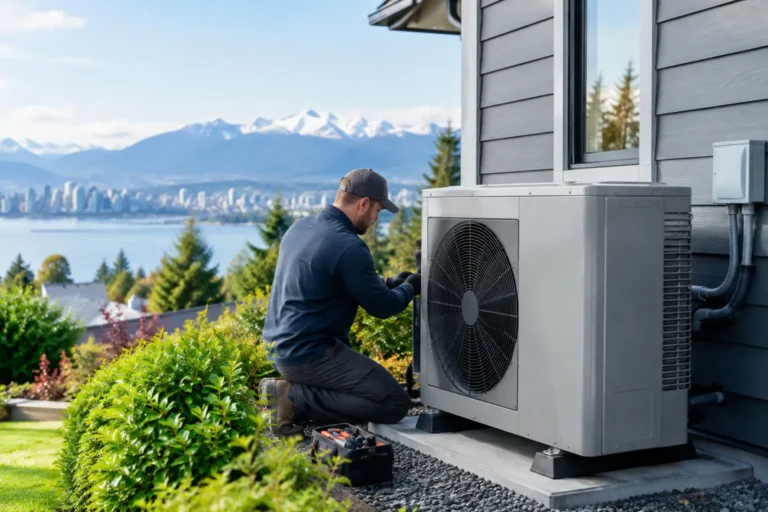
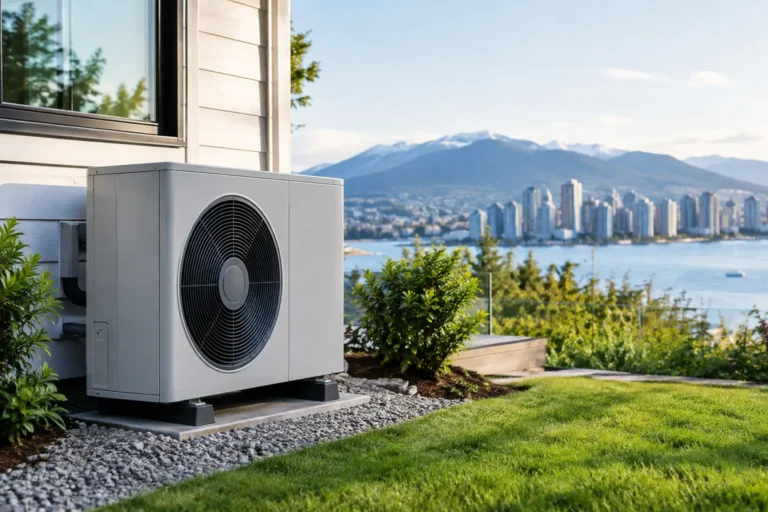
Heat pumps are not plug-and-play appliances. The equipment needs to match the building, the ductwork or indoor heads need proper design, electrical requirements must be addressed, and condensate drainage has to work in wet Lower Mainland weather.
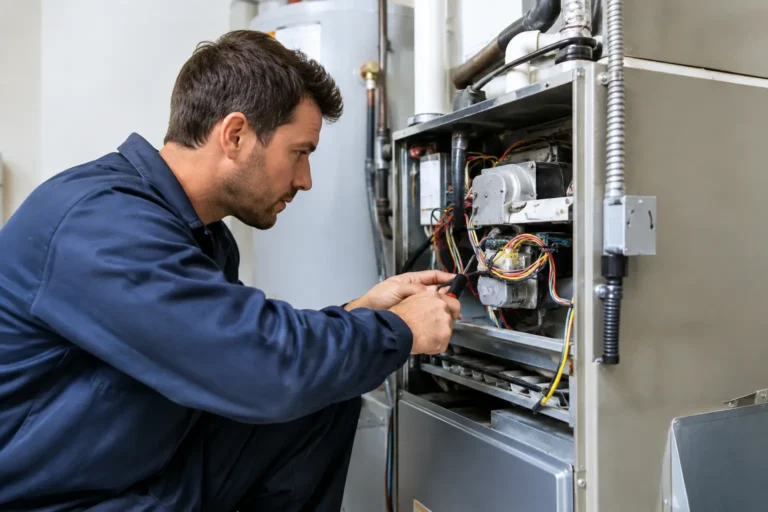
Reviews may not use technical language, but they can still reveal whether the installer handles these fundamentals. Positive signs include customers mentioning an in-home evaluation, clear options, attention to airflow, tidy line-set installation, and an explanation of system controls.
A review that says a contractor “fixed the problem after another installer” can be especially informative. Read it closely. If the issue involved poor sizing, loose wiring, drainage, refrigerant performance, or unfinished commissioning, it shows why the lowest installation price is not always the lowest cost over time.
Sizing and system design matter more than brand alone
Many homeowners begin by asking which heat pump brand is best. That question matters, but installation design is equally important. A respected unit can still perform poorly if it is oversized, undersized, connected to inadequate ductwork, or installed without proper testing.
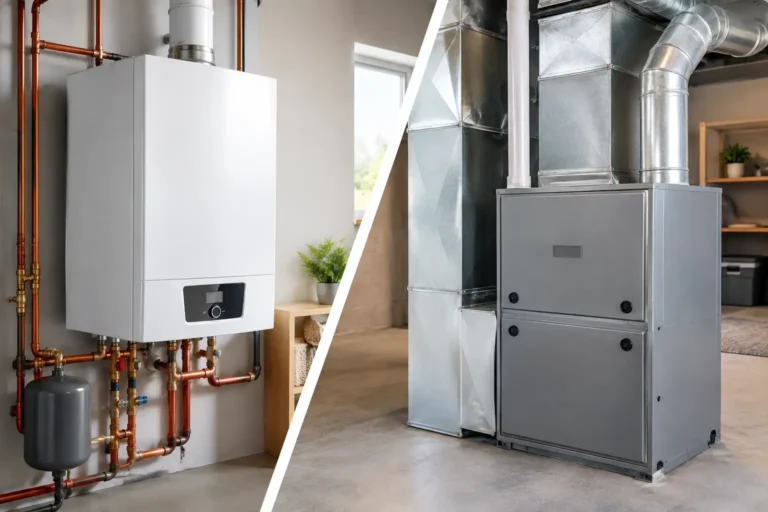
A careful contractor should ask about the home’s layout, insulation, windows, existing heating system, comfort complaints, electrical capacity, and future plans. In some homes, a central ducted heat pump is the practical choice. In others, a ductless mini-split can target difficult rooms or avoid major ductwork changes. A dual-fuel setup may make sense when an existing gas furnace is in good condition and the owner wants a backup heat source.
Good reviews often reflect this process indirectly. Customers may say they were given choices rather than pushed toward one model, or that the installer explained why a particular system fit their property.
Watch for Red Flags in Heat Pump Installation Reviews
No service business receives only glowing feedback forever. What matters is the pattern and the response. One unhappy customer does not automatically mean a contractor should be ruled out. Repeated complaints about the same issue deserve attention.
Be cautious when reviews consistently mention missed appointments, unclear invoices, pressure to approve work immediately, unreturned calls after installation, or surprise charges. For an investment as significant as a heat pump, vague pricing is a concern. A dependable quote should identify the equipment, scope of work, major materials, warranty information, and any conditions that could change the price.
Pay close attention to post-installation support. A heat pump may need an adjustment after the first heating or cooling season. If multiple reviewers say they could not get help when the system was not operating properly, that can outweigh a low initial quote.
It is also worth checking how the company responds to negative reviews. A professional response should be specific, calm, and focused on resolving the issue. Defensive replies, blame-shifting, or no response to serious service concerns can tell you something about accountability.
Questions Reviews Cannot Answer for You
Even the most detailed reviews cannot replace a direct conversation with the installer. Before approving work, ask whether the company is licensed, bonded, and insured, and whether the technicians performing the work are qualified for the scope involved. If gas equipment will be disconnected, retained, or integrated with a dual-fuel system, appropriate gas-fitting qualifications are essential.
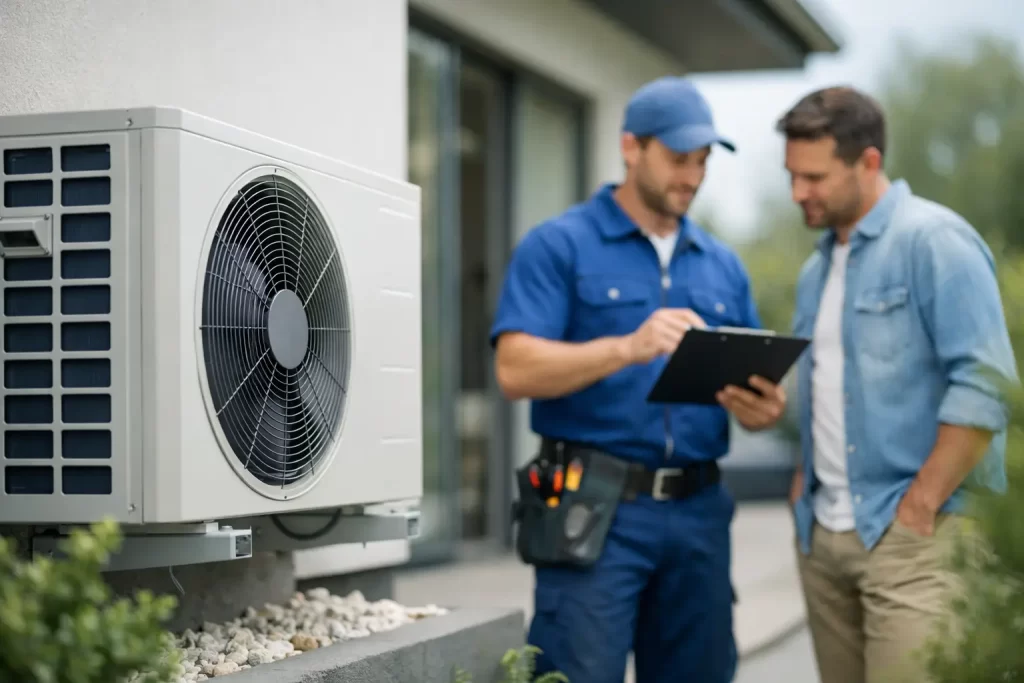
Ask how the heat pump will be sized and whether the quote includes electrical work, permits where required, thermostat controls, outdoor pad or wall brackets, condensate management, startup testing, and removal of old equipment. These details are where two quotes that appear similar can become very different.
You should also ask what happens if the system needs service. Is emergency support available? Who handles warranty calls? Will the installer return to address installation-related concerns? A company that can service heating, cooling, ventilation, and gas equipment may simplify future maintenance, particularly for rental properties and commercial sites.
FlameCo Heating Services provides licensed, bonded, and insured HVAC and gas-related service across Metro Vancouver and the Lower Mainland, with transparent pricing and 24/7 emergency availability. Those credentials and service commitments are the kind of facts worth verifying with any installer before work begins.
Compare Quotes Alongside Heat Pump Installer Reviews
Reviews are most useful when paired with written quotes. Do not compare only the bottom-line number. Compare the equipment efficiency, capacity, labor scope, warranty terms, electrical and ductwork allowances, and expected completion schedule.
A lower quote may be a good value if the scope is genuinely comparable. It may also leave out work that becomes necessary later. For example, upgrading a heat pump can expose duct leakage, insufficient return airflow, electrical limitations, or an outdated thermostat. The right contractor should identify likely concerns before installation and explain which items are included versus optional.
For property managers, consider operational impact as well. The best fit may be the installer that can stage work around tenant schedules, communicate clearly with building representatives, and respond quickly if comfort is disrupted. The lowest bid can become expensive if it creates prolonged downtime or repeated callbacks.
Check Incentives Without Letting Them Choose the System
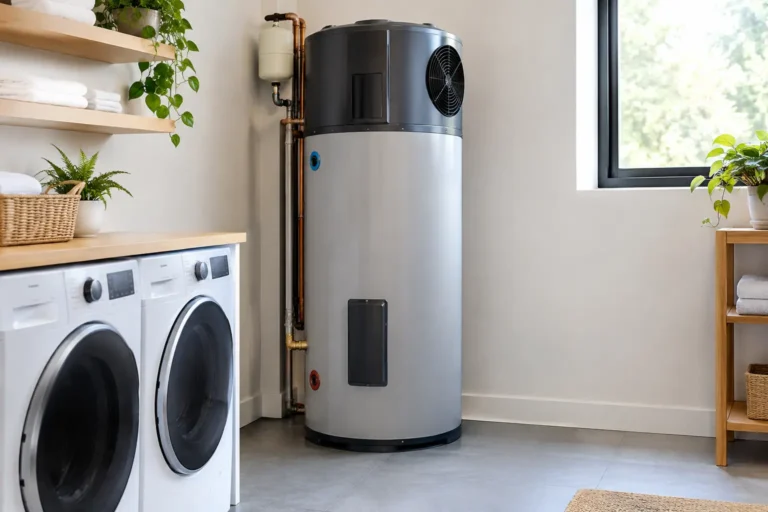
Government and utility incentives can reduce the cost of qualifying heat pump upgrades, and some programs may also apply to heat pump water heaters. Requirements can change, and eligibility may depend on the home, existing fuel source, equipment efficiency, installation date, and documentation.
An experienced installer should be able to explain the equipment information and paperwork you may need. Still, do not choose a system only because it appears to qualify for the largest incentive. The system must suit the building and your comfort needs first. A rebate is helpful, but it does not correct poor sizing or incomplete installation work.
When reading reviews, notice whether customers say the contractor explained available rebate pathways clearly without making unrealistic promises. That is the balanced approach: support with the process while being honest about program rules and approval decisions.
Make the Final Choice With Confidence
The best heat pump installer reviews describe more than friendly people and fast appointments. They point to careful assessment, clear costs, qualified work, respectful communication, and dependable support after the crew leaves.
Choose the contractor that answers your questions directly, documents the scope, and treats your home or property as a system rather than a quick equipment sale. A heat pump should bring dependable comfort for years, and that outcome starts with the people trusted to install it.