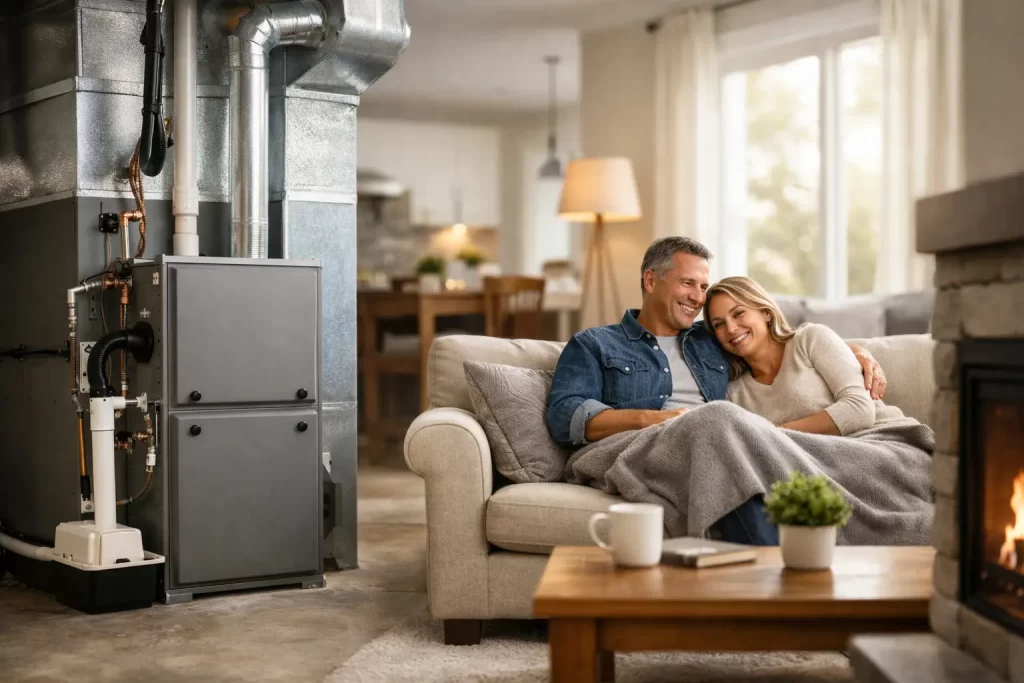
A furnace that cannot keep up on a cold night is a problem. A furnace that is too large can be just as frustrating: it starts and stops repeatedly, creates uneven temperatures, wastes fuel, and may wear out sooner than expected. This furnace sizing guide explains what actually determines the right furnace capacity so you can make a confident repair or replacement decision.
For homeowners, landlords, and property managers, proper sizing is about more than buying enough heat. It is about dependable comfort, safe operation, manageable utility costs, and a system that suits the building rather than relying on a rough guess.
What furnace size really means
Furnace capacity is measured in BTUs, or British thermal units. A furnace’s input BTU rating tells you how much fuel energy it uses per hour. Its output rating tells you how much usable heat it delivers to the home.
For example, a 100,000 BTU furnace with a 96% AFUE rating provides roughly 96,000 BTUs of heating output. AFUE means Annual Fuel Utilization Efficiency. When comparing replacement options, output capacity is the number that matters most for sizing.
A larger number is not automatically better. The goal is to select a furnace that replaces heat as quickly as your home loses it during cold weather. That heat loss changes from one building to another, even between homes with the same square footage.
Why square footage is only a starting point
Many people ask how many BTUs they need per square foot. Square footage can provide a broad preliminary range, but it should never be the final calculation. Two 2,000-square-foot homes can require very different furnace capacities.
A newer, well-insulated home with sealed windows, an insulated basement, and modern ductwork may need substantially less heat than an older home of the same size. A house with high ceilings, large north-facing windows, drafty doors, or rooms over a garage can need more.
In the Lower Mainland, winter temperatures are generally moderate compared with many colder regions, but damp weather and poorly insulated construction can make a home feel cold quickly. A proper assessment considers local design temperatures and the way the building actually performs, not just its address or floor area.
The factors a proper furnace sizing guide must include
A qualified contractor should complete a room-by-room heat loss calculation, often called a Manual J calculation. This process estimates how much heat leaves the building under expected winter conditions. It provides a far more reliable basis for equipment selection than replacing the old furnace with the same size.
The calculation considers several connected details:
- Total square footage, ceiling height, and the volume of each conditioned space
- Insulation in walls, attics, floors, and crawlspaces
- Window and door size, type, orientation, and air leakage
- Building age, construction style, and overall air sealing
- Duct condition, duct location, and airflow capacity
- Local winter design temperatures and desired indoor temperature
- Heat produced by people, appliances, fireplaces, or other equipment
For a rental property or commercial space, usage patterns matter too. A unit occupied all day has different comfort demands than a building that is vacant overnight. Retail spaces, offices, apartments, and workshops can also have different ventilation and heat-loss requirements.
The risk of an oversized furnace
Oversizing is common because it seems safe. People often assume extra heating capacity guarantees comfort. In practice, an oversized furnace can create a short-cycling problem. The system heats the air near the thermostat quickly, shuts off before heat reaches distant rooms, then restarts again soon after.
That cycle can lead to temperature swings, louder operation, higher energy use, and added wear on components such as igniters, blower motors, and control boards. It can also make ductwork problems more noticeable because high airflow may create noise or push too much air into certain rooms.
An oversized furnace may be especially disappointing after insulation upgrades, window replacements, or air-sealing work. If the old furnace was selected before those improvements, the home’s heat loss may now be lower than it was when the furnace was installed.
The risk of an undersized furnace
A furnace that is too small may run continuously during the coldest weather and still fail to maintain the thermostat setting. Some continuous operation is normal during severe cold conditions, but a properly selected system should be capable of maintaining safe, reasonable indoor comfort at the local design temperature.
Undersizing is not always caused by choosing a low BTU model. Restricted ducts, a dirty filter, weak blower performance, closed registers, or poor return-air design can keep a correctly sized furnace from delivering enough heat. Before replacing equipment, the full heating system should be evaluated.
This is particularly important for homes with added basement suites, converted garages, additions, or remodeled upper floors. The furnace and duct system may have been sized for the original layout, not the way the property is used today.
Furnace capacity and ductwork must match
A new furnace does not work independently from the ducts. Every furnace needs enough return air to operate safely and enough supply airflow to distribute heat evenly. If ductwork is undersized, damaged, poorly sealed, or badly balanced, installing a more powerful furnace may not solve cold rooms.
In some cases, the best solution includes duct modifications, additional returns, zoning, or a ductless mini-split for a hard-to-heat addition. For larger homes and multi-unit properties, a two-stage or variable-speed furnace can also improve comfort by operating at a lower capacity during milder weather and increasing output only when needed.
These options cost more upfront than a basic single-stage replacement, so the right choice depends on the building, comfort concerns, and budget. A transparent quote should explain the capacity being proposed, the efficiency rating, and whether duct or ventilation work is recommended.
How heat pumps affect furnace sizing
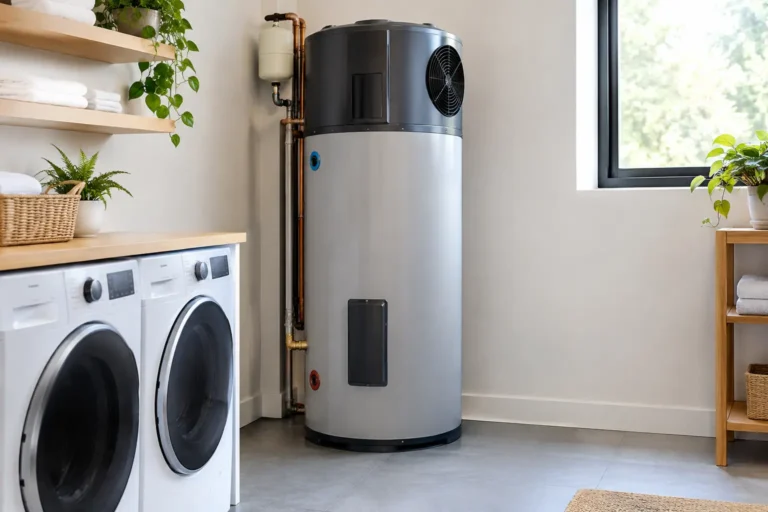
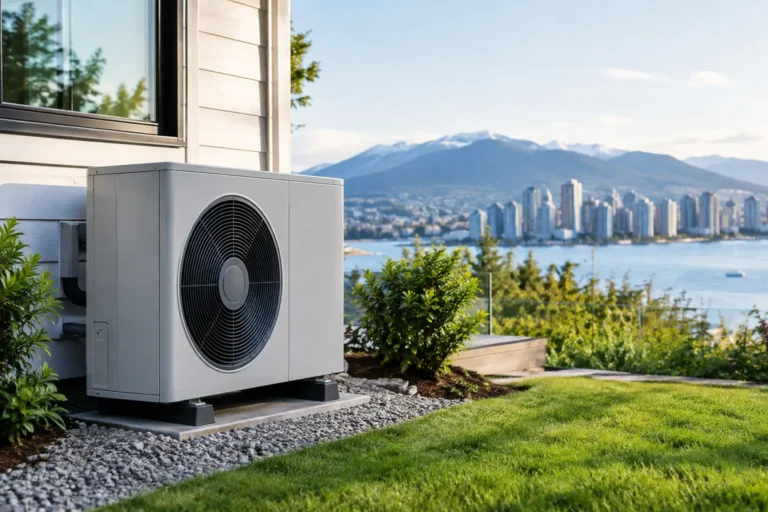
If you are considering a heat pump, furnace sizing becomes part of a larger system decision. A dual-fuel setup uses a heat pump for efficient heating during milder conditions and a gas furnace when outdoor temperatures drop or additional capacity is needed.
The furnace in a dual-fuel system may not need to be sized exactly like a furnace that handles all heating on its own. Equipment selection should account for the heat pump’s performance, control settings, electrical capacity, and the home’s calculated heat loss.
Available government incentives and rebate programs may help offset qualifying heat pump or heat pump water heater upgrades. Requirements can change, so confirm eligibility before making a final equipment choice. The potential savings are worth reviewing, but proper design and installation should come first.
What to expect from a professional sizing assessment
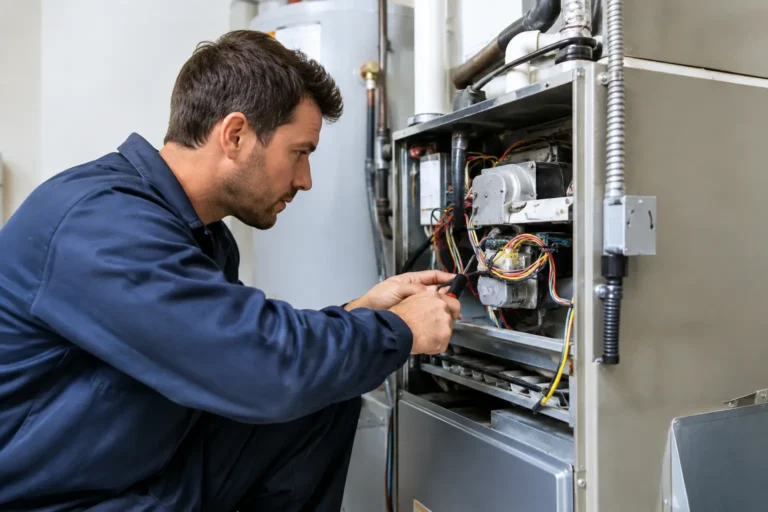
Before approving a furnace replacement, ask for more than a BTU recommendation. A dependable contractor should inspect the existing equipment, verify fuel and venting requirements, examine ductwork, and ask about comfort issues in specific rooms.
They should also discuss whether the old furnace was actually performing well. If it was noisy, short-cycled, left bedrooms cold, or struggled after a renovation, replacing it with the same capacity without investigation can repeat the problem.
For gas-fired equipment, sizing and installation are safety matters as well as comfort matters. Venting, combustion air, gas piping, condensate drainage on high-efficiency models, clearances, and code requirements all need qualified attention. Work with a licensed, bonded, and insured HVAC and gas contractor that can take responsibility for the full installation.
When it is time to get an on-site quote
Request an assessment if your furnace is more than 15 years old, needs frequent repairs, runs constantly, produces uneven heat, or is being replaced as part of a renovation. Landlords and property managers should also plan ahead when equipment is aging rather than waiting for a no-heat call during peak winter demand.
FlameCo Heating Services can assess furnace capacity, ductwork, ventilation, and gas-installation requirements as part of a clear replacement plan. A professional on-site evaluation gives you a practical answer based on your property, not a one-size-fits-all estimate.
The right furnace should not call attention to itself. It should start when needed, heat the building evenly, operate safely, and give you one less urgent problem to manage when the weather turns cold.