A boiler that suddenly bangs when the heat comes on can make a home or building feel like something is about to break. Boiler banging sounds are often caused by water, air, mineral buildup, or pressure moving where it should not. Some causes are minor, but repeated loud banging deserves attention before a small circulation issue becomes a no-heat call, water damage, or an unsafe operating condition.
For homeowners, landlords, and property managers, the useful question is not simply whether the noise is annoying. It is when the sound occurs, where it comes from, and whether the boiler is still heating normally. Those details help separate a simple pipe-expansion noise from a boiler problem that needs a licensed technician.
What boiler banging sounds can mean
Not every knock is coming from the boiler itself. Metal pipes expand as they warm and can rub against framing, hangers, or flooring. This usually creates a lighter ticking, tapping, or occasional knocking sound as the system heats up and cools down. It may be irritating, but it is not always an emergency.
A sharp bang, deep thud, or repeated hammering from the boiler room is different. It can indicate that water is flashing into steam inside the heat exchanger, air is trapped in the system, a circulator is struggling, or system pressure is outside the proper range. If the sound began recently, has become louder, or comes with uneven heat, treat it as a service issue rather than something to ignore.
Kettling from mineral buildup
One of the most common reasons for a banging or rumbling boiler is kettling. Over time, minerals and debris can collect inside the heat exchanger. Water has less room to move across the hot metal surface, causing localized overheating. Small pockets of water may turn to steam and collapse, creating a sound similar to a kettle rumbling or banging.
Kettling can reduce heating efficiency and put added stress on the boiler. It is more likely in older equipment, systems with untreated water, or locations where hard-water mineral content is a factor. The proper repair may involve flushing or cleaning the system, addressing water quality, and checking whether the heat exchanger has been damaged. Simply turning the thermostat down may make the noise less noticeable, but it does not fix the buildup.
Trapped air in radiators or heating lines
Air in a hydronic heating system can produce gurgling, bubbling, rushing-water sounds, and occasional knocking. Air pockets interrupt water flow, so certain radiators or baseboards may stay cool while others heat normally. In larger properties, occupants may report that one unit is cold while another overheats.
Bleeding air from a radiator can be a straightforward task on some systems, but recurring air is a sign to look deeper. A leak, failed automatic air vent, pressure issue, or malfunctioning expansion tank may be allowing air into the loop. Repeatedly adding water without identifying the cause can introduce more minerals and oxygen, creating further corrosion and buildup.
Water hammer in heating pipes
Water hammer is a forceful bang caused by a sudden change in water flow. In a boiler system, it may occur when a valve closes quickly, a circulator starts or stops, or piping is not properly supported. The sound can travel through walls and floors, making it difficult to identify its source.
Unlike normal thermal expansion, water hammer is often abrupt and distinct. It may happen at the beginning or end of a heating cycle. Loose pipe supports, worn valves, incorrect flow conditions, or improper system pressure can all contribute. A technician should inspect the piping layout and boiler controls rather than relying on a temporary workaround.
Pressure and circulation problems that need attention
A closed-loop boiler system relies on stable pressure and consistent water circulation. If pressure is too low, water may not reach all parts of the system properly. If it is too high, the pressure-relief valve may discharge water and components can be stressed.
Many residential systems operate within a specific pressure range when cold and rise as they heat. The correct range depends on the system design, building height, and boiler manufacturer. Do not adjust pressure blindly based on an online number. Overfilling a boiler is an easy way to create another problem.
A failing circulator pump can also cause noise and poor heat distribution. You may hear humming, grinding, or intermittent banging as the pump struggles to move water. Zone valves that stick or fail to open fully can create similar symptoms. These issues need diagnosis because the same noise can have several possible causes.
When banging is a safety concern
Turn the boiler off and arrange prompt professional service if you notice banging along with any of the following conditions:
- A gas smell, rotten-egg odor, or suspected gas leak
- Water leaking from the boiler, relief valve, or connected piping
- A pressure gauge that climbs unusually high or drops repeatedly
- Steam, scorching smells, soot, or discoloration around the appliance
- Carbon monoxide alarm activity, headaches, dizziness, or nausea indoors
- No heat, repeated shutdowns, or error codes that return after a reset
If you smell gas, leave the area, avoid switches and open flames, and contact the appropriate emergency utility or fire service from a safe location. Do not try to relight, disassemble, or test a gas-fired boiler yourself.
Safe checks you can make before calling
You do not need to take panels off the boiler to provide helpful information for a service call. Start by noting whether the noise occurs at startup, while heat is running, or after the system shuts off. Check whether it seems to come from the boiler cabinet, nearby pipes, a radiator, or baseboard heating.
Look for visible water around the boiler and check whether the pressure gauge is clearly outside its normal operating area. Notice whether all rooms are heating, whether radiators have cold spots, and whether the boiler display shows an error message. If the noise began after recent construction, a plumbing repair, or a water outage, mention that as well.
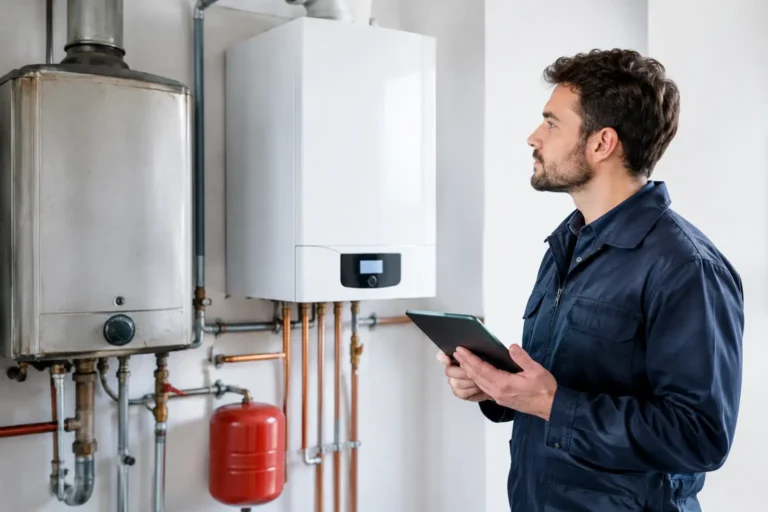
Avoid opening sealed boiler components, touching hot piping, draining the system, or repeatedly pressing the reset button. Those actions can make diagnosis harder and, in some cases, create a safety risk. A qualified technician can test pressure, combustion, circulation, controls, safety valves, and the condition of the heat exchanger.
Repair or replacement: how to make the call
A boiler that bangs does not automatically need replacement. If the issue is air, a failed vent, a circulator problem, or manageable scale buildup, repair may be the sensible option. The decision changes when the boiler is older, leaks from the heat exchanger, needs frequent repairs, or cannot heat the property reliably.
For landlords and commercial property managers, the cost of recurring disruption matters too. An older boiler may still run, but repeated tenant complaints, after-hours calls, uneven temperatures, and rising fuel use can make replacement the more predictable financial choice. A clear diagnostic assessment should explain the immediate repair, the condition of the equipment, and realistic options before work begins.
FlameCo Heating Services provides licensed boiler diagnostics, repair, maintenance, and replacement support across Maple Ridge and the Lower Mainland. For gas-fired equipment, qualified service protects more than comfort. It helps ensure the appliance, venting, controls, and connected heating system are working together as intended.
A boiler should heat quietly enough that you do not have to wonder what that next bang means. If the noise is new, loud, or paired with pressure changes or uneven heat, arranging service early can protect your equipment and restore confidence in your heating system.