A puddle under a boiler is not a wait-and-see problem. Boiler leaking water repair starts with limiting water damage, protecting the equipment, and identifying whether the leak is from a simple external connection or a pressurized component inside the system. A small drip can become a no-heat call, damaged flooring, or a safety concern if the boiler continues to run without proper pressure.
For homeowners, landlords, and property managers, the right response is calm but quick. You do not need to diagnose every part yourself. You do need to know when to turn the system off, what not to touch, and when to call a licensed boiler technician.
What to Do When Your Boiler Is Leaking
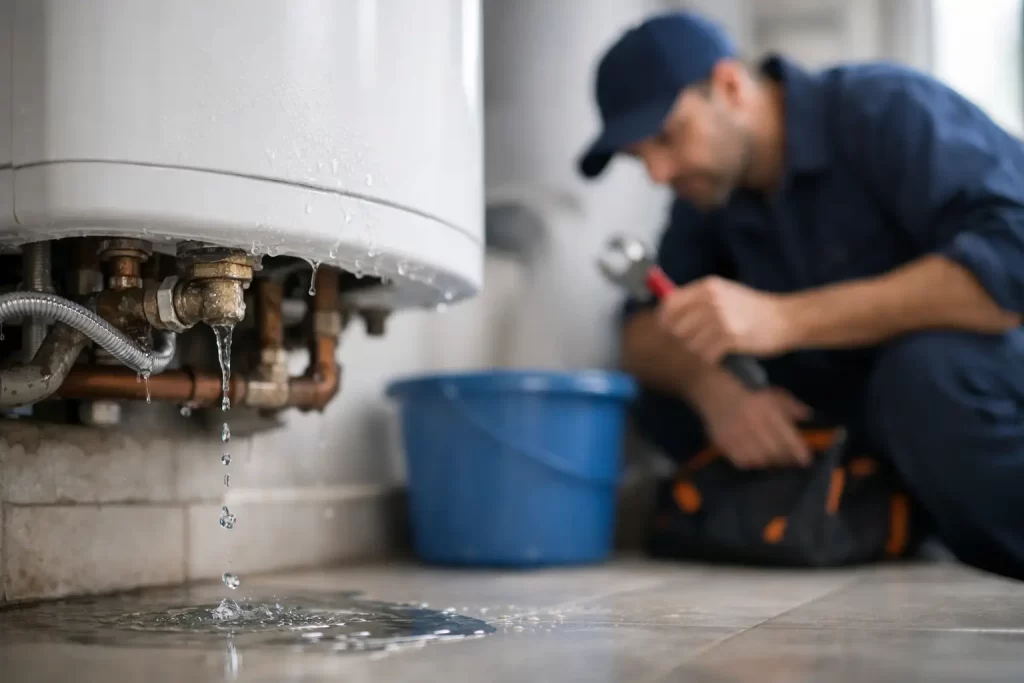
First, place towels, a shallow pan, or a bucket under the leak if it can be done safely. Move boxes, electronics, and valuables away from the area. Do not remove the boiler cabinet or try to seal a hot pipe with tape, putty, or a clamp.
If water is actively flowing, turn the boiler off at its electrical service switch or breaker. If you know where the boiler’s cold-water supply valve is and can reach it without standing in water or touching hot surfaces, close it. This may slow the leak, but do not force a seized valve.
If the boiler is gas-fired and you smell gas, hear hissing near a gas line, or feel lightheaded, leave the building immediately. Do not use switches, phones, or flames inside. Call emergency services and your gas utility from a safe location. A water leak alone is not necessarily a gas emergency, but any possible gas odor changes the situation.
Take a few photos of the water source and the boiler pressure gauge before a technician arrives. This can help establish whether the pressure was rising, falling, or already outside its normal range. Then arrange a professional inspection, especially if the leak returns after the boiler cools down.
When Boiler Leaking Water Repair Is Urgent
Every boiler leak deserves attention, but some situations should be treated as urgent. A steady stream of water, a leak near electrical controls, water coming through a ceiling, or loss of heat in cold weather all call for prompt service. Commercial and multi-unit properties should move quickly as well, since a failed boiler can affect multiple tenants and create costly water damage.
A pressure gauge reading above the boiler’s normal operating range is another warning sign. Many closed-loop heating systems operate around 12 to 15 psi when cool and somewhat higher when hot, although the correct range depends on the equipment and building. If pressure climbs close to 30 psi and water is discharging from a relief valve, turn the system off and book service. Repeatedly resetting or refilling the boiler can make the underlying fault worse.
Rust-colored water, mineral deposits around fittings, or moisture beneath the boiler may indicate a slower leak that has been present for some time. It may not flood the room today, but corrosion can weaken parts and cause a larger failure later. Early repair is usually less disruptive than waiting for a component to fail during a cold spell.
Common Reasons a Boiler Leaks Water
A failing pressure relief valve
The pressure relief valve is designed to release water when system pressure becomes too high. Water dripping from its discharge pipe does not always mean the valve itself is defective. The valve may be doing its job because an expansion tank has lost its air charge, the fill valve is overfeeding the system, or the boiler is overheating.
Replacing a relief valve without finding the pressure problem can lead to the same leak again. A qualified technician should test the pressure, expansion tank, fill assembly, and operating controls before recommending the repair.
Expansion tank problems
An expansion tank absorbs the natural pressure increase that occurs as heating water warms up. When the tank becomes waterlogged or loses its charge, system pressure can rise sharply during a heating cycle. The relief valve may then open and drip water.
This is a common repair, but the correct tank size and pressure setting matter. A boiler technician can confirm whether the tank is the issue rather than guessing based on a wet discharge pipe.
Leaking pipes, valves, or circulator connections
Heating pipes and fittings can leak at threaded joints, isolation valves, air vents, circulator pumps, or zone valves. Sometimes the source is obvious. Other times, water travels along a pipe or drips from the bottom of the boiler, making the actual origin difficult to spot.
A minor leak at a fitting may be repairable with a new gasket, valve, or properly sealed connection. A corroded pump flange, failed circulator seal, or deteriorated pipe section may require replacement parts. The best repair depends on the component condition, the boiler’s age, and whether other system issues are already developing.
A faulty automatic fill valve
The automatic fill valve adds water to maintain proper system pressure. If it sticks open or is set incorrectly, it can overfill the boiler system. High pressure can trigger the relief valve and make it look like the boiler is leaking from the bottom.
Do not keep opening the fill valve to raise pressure unless you have been shown how to do so. Adding too much water can create pressure problems, introduce oxygen that contributes to corrosion, and mask the real reason the system lost pressure in the first place.
Condensate drain leaks on high-efficiency boilers
High-efficiency condensing boilers produce acidic condensate that drains through a trap and pipe. A blocked trap, cracked drain line, loose connection, or failed condensate pump can leave water around the unit. This water is often clear and may appear only while the boiler is firing.
Condensate repairs can be straightforward, but the drain route, neutralizer, and pump should be checked together. A drain that repeatedly plugs may point to installation or maintenance issues that need more than a quick cleanup.
Internal corrosion or a cracked heat exchanger
Water leaking from inside the boiler cabinet can be more serious. Internal corrosion, damaged seals, or a cracked heat exchanger may make repair impractical on an older unit. The technician will assess the leak location, part availability, combustion safety, repair cost, and expected remaining service life.
Replacement is not automatically the answer. A newer boiler with a single failed component may be worth repairing. An older boiler with corrosion, recurring leaks, poor efficiency, and expensive parts may be better replaced with a properly sized modern system. The decision should come with clear pricing and a realistic explanation of both options.
Avoid These DIY Fixes
Boilers combine hot water, pressure, electrical controls, and often natural gas. That is why a temporary fix can create a bigger issue. Do not cap a relief valve discharge pipe, bypass a safety control, add chemical sealants without professional advice, or repeatedly top up a leaking system.
It is also risky to remove boiler panels or adjust gas valves. The apparent leak may be connected to pressure control, combustion, or venting performance, not just plumbing. Licensed service protects the equipment and helps ensure the system is safe to operate after the repair.
What a Professional Boiler Repair Visit Should Include
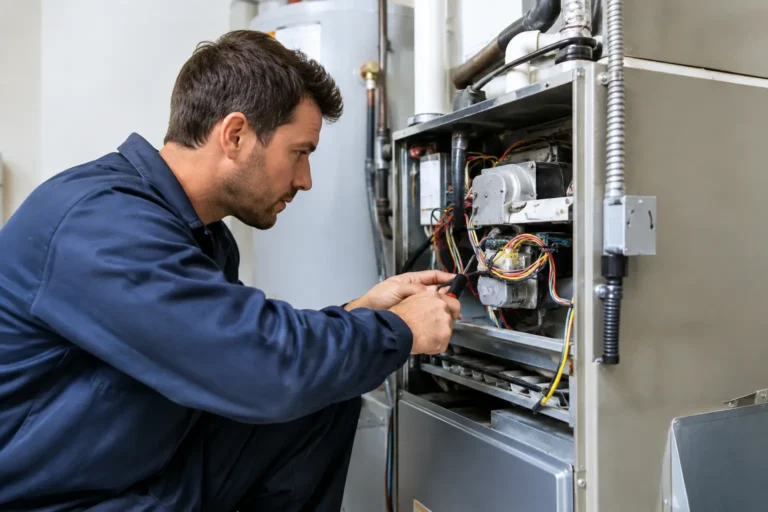
A proper service call begins with locating the true leak source, not simply replacing the wettest-looking part. The technician should inspect the pressure gauge, relief valve, expansion tank, fill valve, pumps, piping, vents, and condensate system where applicable. On gas-fired equipment, combustion-related components and safety controls may also need evaluation.
You should receive a clear explanation of what failed, what repair is recommended, and what the cost covers before work proceeds. For property managers, it is worth documenting the repair, pressure readings, and any recommendations for follow-up maintenance. That record can help prevent repeat tenant disruptions and support planning for a future replacement.
FlameCo Heating Services provides licensed, bonded, and insured boiler service across Maple Ridge, Metro Vancouver, and the Lower Mainland, including urgent calls when a leak threatens heat, property, or tenant comfort. The focus is straightforward: identify the cause, explain the options, and complete the repair without hidden-fee surprises.
Preventing Another Boiler Leak
Annual boiler maintenance is one of the most practical ways to catch pressure and condensate problems before they become visible leaks. A service visit can identify early corrosion, test safety components, inspect the expansion tank, clean condensate parts, and confirm that the boiler is operating within its expected pressure range.
Pay attention to small changes between visits. New boiler noises, pressure that rises and falls dramatically, frequent need to add water, dampness near valves, or a relief pipe that drips after heating cycles all deserve a call. The faster a leak is identified, the more likely the repair stays limited to a serviceable part rather than a larger system failure.
If your boiler is leaking now, protect the area, switch the unit off if water is actively escaping, and arrange qualified service before the next heating cycle turns a manageable drip into a bigger repair.