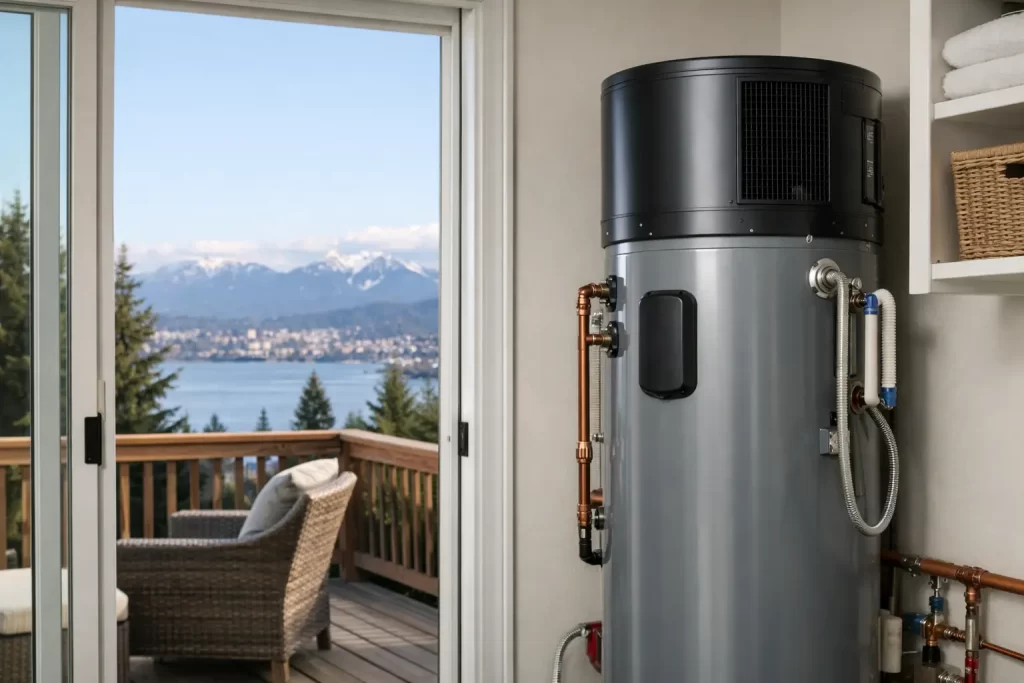
A heat pump water heater can cut the energy used for domestic hot water significantly, but it is not a simple swap for every aging tank. This heat pump water heater guide helps Lower Mainland property owners understand where these systems work best, what installation involves, and when a conventional or gas-fired option may still make more sense.
Unlike a standard electric water heater that creates heat directly at the tank, a heat pump water heater pulls heat from surrounding air and transfers it into the stored water. Think of it as an appliance that moves heat rather than manufacturing all of it. That difference is what drives the efficiency advantage.
How a heat pump water heater works
A heat pump water heater has a storage tank, but its operation is different from a typical electric tank. A small fan draws in warm room air. Refrigerant inside the unit absorbs that heat, compresses it, and releases it into the water tank. Most models also include electric resistance elements as backup for high-demand periods or colder conditions.
The system does two things at once: it heats your water and cools and dehumidifies the space around it. That can be useful in a warm mechanical room, garage, or unfinished basement. In a small conditioned room, however, that cooling effect can be a drawback during the heating season.
Because the unit depends on available air heat, location matters more than it does with a regular electric tank. The equipment needs enough air volume and clearance to operate properly. It also creates condensate, which must drain safely. These details should be assessed before a replacement is ordered, not after the old tank has been removed.
Why homeowners are considering this upgrade
For homes that currently use an electric water heater, the potential operating-cost reduction is the main reason to consider a heat pump model. It can use far less electricity than a conventional electric tank, especially when installed in a suitable space and operated in its efficient heat-pump setting.
It can also reduce demand on the household electrical system compared with standard resistance heating. That may be helpful for homeowners planning broader electrification projects, such as a space-heating heat pump, while trying to manage electrical capacity.
There is another practical benefit in many Lower Mainland homes: dehumidification. In a damp basement or utility area, the cool, dry air produced by the unit may be welcome. It should not replace a dedicated moisture-control plan where one is needed, but it can be a useful side effect.
Government incentives may improve the numbers. Available programs, eligibility rules, equipment requirements, and funding levels can change, so homeowners should verify current heat pump water heater rebate options before purchasing. A qualified contractor can help identify whether the proposed equipment and installation approach fit the requirements before work begins.
The trade-offs to understand first
A heat pump water heater is efficient, but it is not invisible. The fan and compressor make sound similar to a refrigerator, though often more noticeable because the equipment may run for longer periods. A mechanical room, garage, unfinished basement, or separated utility area is usually a better location than a closet beside a bedroom.
Recovery time is another consideration. In heat-pump-only mode, the unit may take longer to replenish hot water after several consecutive showers, laundry loads, or commercial-style demands. Hybrid mode uses backup electric elements to recover faster, but that can reduce energy savings. Tank sizing and household habits matter.
Cold locations also deserve attention. The Lower Mainland has relatively moderate winters, but garages and unheated outbuildings can still become cold enough to affect performance. A unit installed in a conditioned or semi-conditioned utility space often has a more reliable operating environment. Every property is different, so the installer should assess air temperature, room volume, drainage, electrical supply, and access.
For a home with existing natural gas water heating, the decision is more complex. High-efficiency gas equipment may still be a strong option where gas infrastructure is already in place, hot-water demand is high, or the installation area cannot support a heat pump water heater. The right answer should be based on the home, the fuel setup, the electrical panel, and long-term operating goals, not a one-size-fits-all recommendation.
Heat pump water heater guide: choosing the right size
A water heater that is too small creates frustrating shortages. One that is oversized may cost more upfront and take up more space than necessary. Heat pump models are commonly selected based on tank capacity and first-hour delivery, which estimates how much hot water the unit can supply during a busy hour.
A smaller household with one or two occupants may be well served by a tank around 50 gallons, depending on usage. Larger families, homes with multiple bathrooms, soaking tubs, frequent laundry, or back-to-back morning showers often need a larger capacity. Property managers should also account for the actual occupancy pattern rather than the number of bedrooms alone.
A professional assessment should include the number of occupants, bathrooms, fixture types, dishwasher and laundry use, and whether occupants typically use hot water at the same time. For rental properties, a little extra capacity can prevent service calls caused by predictable peak demand.
What installation should include
A proper installation is more than connecting water lines. The existing tank must be removed safely, the new unit positioned with required clearances, and the water, electrical, condensate, and safety connections completed correctly. If the unit is being installed in a garage or unfinished area, local requirements for protection, drainage, and placement may apply.
The electrical side needs particular attention. Many heat pump water heaters require a dedicated circuit, and an older panel may need evaluation before installation. The installer should also check whether the existing wiring, disconnect, and breaker are suitable for the selected model.
Drainage is equally important. During operation, the unit produces condensate. That water needs a reliable drain route or condensate pump. A poor drainage plan can lead to water damage, nuisance shutdowns, or an installation that is difficult to maintain.
Ventilation and air volume should be addressed before selecting the unit. Some tight mechanical rooms may need ducting or another design solution so the heat pump has sufficient air to work with. Do not assume that a standard tank footprint means a standard installation.
Operating settings and maintenance
Most units offer several modes. Heat-pump-only or efficiency mode prioritizes lower energy use. Hybrid mode balances efficiency and recovery speed. High-demand or electric mode can be useful temporarily when guests are visiting or household demand is unusually high, but it should not become the everyday setting if efficiency is the goal.
Routine care is straightforward, but it should not be skipped. The air filter needs periodic cleaning, the condensate drain should be checked, and the area around the unit should be kept clear. Like any tank-style water heater, the temperature-and-pressure relief valve and tank condition need regular professional attention.
If you notice a leaking tank, a persistent error code, an unusual amount of noise, no hot water, or water collecting around the equipment, arrange service promptly. Water-heater failures can become property-damage issues quickly, particularly in apartments, strata properties, and finished basements.
Costs, savings, and replacement timing
The installed cost of a heat pump water heater is usually higher than a basic electric tank because the equipment is more complex and the installation may require electrical, drainage, or space modifications. The value comes from lower operating costs over time, possible rebates, and the fit with a wider home-energy plan.
The best time to evaluate options is before the existing water heater fails. An emergency replacement often limits choices, especially if the home needs electrical upgrades or a condensate drain added. Planning ahead gives you time to compare fuel options, confirm available incentives, choose an appropriate tank size, and schedule work with less disruption.
For Lower Mainland homeowners and property managers, FlameCo Heating Services can assess the installation space, hot-water demand, electrical requirements, and available upgrade pathways before recommending a replacement. Licensed, bonded, and insured work matters when water, electricity, drainage, and existing gas equipment may all be part of the same project.
A heat pump water heater is most rewarding when it is selected for the building instead of simply selected for its efficiency label. Start with the space, the household demand, and the condition of the existing system, then make the upgrade decision before hot water becomes an emergency.