A gas fireplace that clicks without lighting, goes out after a few minutes, or leaves a strange odor is not a problem to keep testing. Fireplace repair starts with identifying whether the issue is a simple operating fault or a combustion and gas-safety concern that needs licensed service. For homeowners, landlords, and property managers, the right response protects the people in the building as well as the equipment.
Many fireplace problems appear when the weather turns cold and the unit is needed most. A fireplace may have sat unused for months, leaving dust around the pilot assembly, weak batteries in the receiver, blocked venting, or worn components that only show up under operation. A qualified technician can diagnose the actual cause, explain the repair clearly, and help you decide whether repair or replacement makes better financial sense.
When Fireplace Repair Cannot Wait
Turn the fireplace off and arrange professional help promptly if you smell gas, notice soot around the unit, see yellow or lazy flames where blue flames are expected, or experience repeated shutdowns. Do not keep relighting the fireplace to see whether the issue clears itself.
If you smell gas, avoid switches, appliances, flames, and anything that could create a spark. Leave the area, follow your gas utility’s emergency instructions, and call for help from a safe location. A gas odor is not a maintenance reminder. It is a potential safety emergency.
Other signs deserve fast attention even without a gas smell:
- The pilot will not light or will not stay lit.
- The fireplace makes delayed ignition sounds, popping, or unusual banging noises.
- Flames are producing black soot, staining glass, or leaving marks around the firebox.
- A carbon monoxide alarm sounds, occupants feel dizzy or nauseated, or exhaust odors enter the room.
Carbon monoxide has no reliable smell or color. Keep working carbon monoxide alarms installed according to local requirements, and treat an alarm as an emergency. Get everyone outside and contact emergency services or your gas utility as directed.
Common Fireplace Problems and What They Mean
A fireplace that will not turn on is not always a gas-supply failure. Many modern gas fireplaces use a wall switch, remote receiver, electronic ignition, safety sensor, and control module. Dead remote batteries, a tripped breaker, loose wiring, or a failed receiver can stop the unit from responding. Those are often repairable issues, but the system should be tested properly rather than bypassed.
Pilot problems are also common. A weak pilot flame may not heat the flame-sensing device sufficiently, causing the unit to shut down. Dust, oxidation, a worn thermocouple or thermopile, low gas pressure, or a failing valve can all create similar symptoms. Replacing a part without confirming the cause can waste money and leave the original problem unresolved.
Dirty or cloudy fireplace glass is another concern. A light white film can develop from normal operation, especially after the first few burns of a season. Heavy black soot, however, is different. It can point to incorrect burner performance, blocked ports, venting trouble, or log placement that is disrupting the flame pattern. Do not rearrange ceramic logs unless you have the manufacturer’s layout instructions. Their placement affects combustion and safety.
A fireplace that starts but turns off after several minutes may be overheating, losing flame signal, or running into a venting or airflow problem. Direct-vent fireplaces depend on an unobstructed intake and exhaust path. Birds’ nests, debris, snow buildup, damaged vent connections, or exterior changes near the termination can interfere with operation. This is particularly relevant for multifamily properties, where vent terminations may be difficult to inspect safely without proper access.
Electric fireplaces have a different set of issues, including failed heaters, blower motors, control boards, flame-effect components, and electrical supply faults. They do not involve combustion, but repeated breaker trips, burning odors, or damaged wiring still call for qualified service. Never operate an electric fireplace with a damaged cord, overheating plug, or removed safety guard.
What a Professional Fireplace Repair Visit Should Include
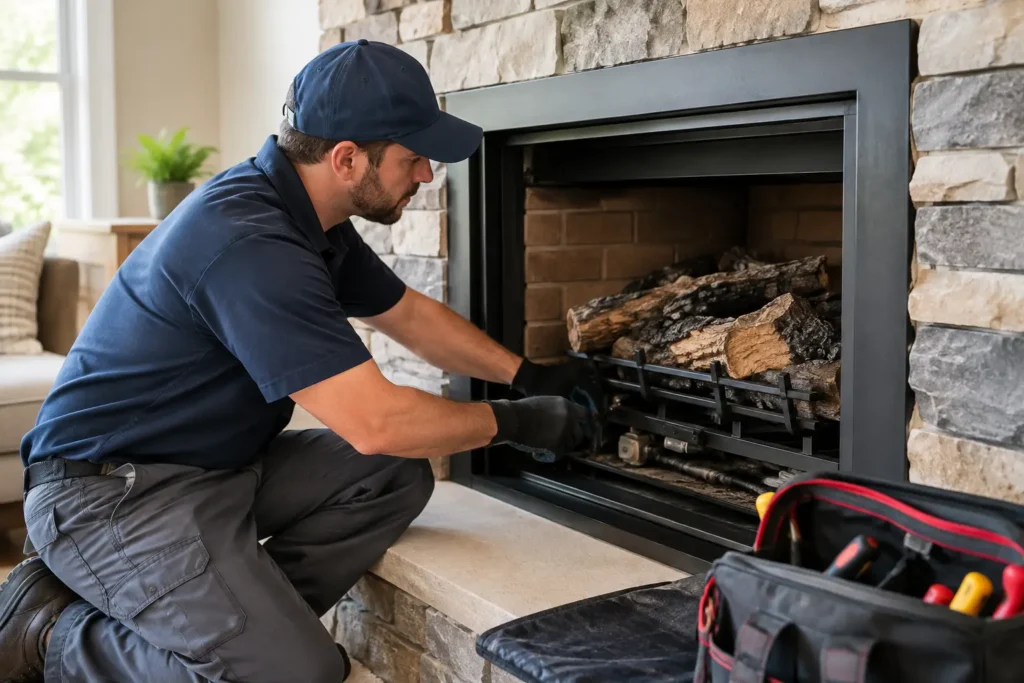
A proper diagnostic visit should go beyond getting the flames back on for the moment. The technician should inspect the ignition sequence, pilot and burner performance, safety controls, gas connections, venting condition where applicable, glass and gasket condition, and the unit’s overall operation.
For a gas fireplace, this may include checking gas pressure, cleaning the pilot assembly, testing the thermopile or thermocouple, confirming the valve and switch circuit are working, and verifying that the flame appearance is correct. The goal is to correct the fault while confirming the appliance is operating safely.
Ask for a clear explanation of the issue before authorizing work. A dependable contractor should tell you what failed, what repair is recommended, what the cost includes, and whether another issue could affect reliability later. Upfront pricing matters, especially when a fireplace problem occurs after hours or when a rental unit needs immediate attention.
FlameCo Heating Services provides licensed, bonded, and insured gas and HVAC service across Maple Ridge, Metro Vancouver, and the Lower Mainland, including urgent fireplace concerns. For gas appliances, qualified handling is not optional. It is the right way to protect occupants, property, and your equipment investment.
Repair or Replace: Making the Right Call
Most fireplace issues do not automatically mean replacement. Batteries, switches, sensors, pilot components, gaskets, and blower motors can often be repaired at a reasonable cost. A well-maintained fireplace with available parts may have many useful years left.
Replacement deserves consideration when parts are obsolete, the firebox or venting system is damaged, repairs are becoming frequent, or the unit no longer meets your needs for appearance, heat output, or efficiency. Older fireplaces can also be harder to service if the manufacturer no longer supports the model.
The best choice depends on the condition of the full system, not just the failed part. For example, replacing a worn component on an otherwise sound unit can be a practical repair. Spending heavily on a unit with recurring ignition issues, deteriorated venting, and unavailable parts may not be. A technician should provide an honest comparison rather than pushing a replacement before the diagnostic work is complete.
For landlords and property managers, replacement timing can also depend on tenant schedules, access requirements, and the risk of another outage during heating season. Planning a replacement before a complete failure can reduce disruption and make budgeting easier.
Simple Care That Helps Prevent Breakdowns
A fireplace needs periodic professional service, particularly before regular winter use. Annual service is a sensible baseline for many gas fireplaces, although actual needs vary by model, usage, and manufacturer instructions. High-use units and fireplaces in rental or commercial spaces may need closer attention.
Between service visits, keep the exterior vent area clear of leaves, snow, stored items, and landscaping. Keep the glass closed during operation unless your model specifically allows otherwise. Replace remote batteries before the heating season, and avoid spraying cleaners into controls, burners, or pilot areas.
Homeowners can carefully clean the exterior glass only when the unit is cool and according to the manufacturer’s guidance. Do not use abrasive products, and do not remove the glass panel, logs, burner media, or sealed combustion components unless you are trained and authorized to do so. What looks like a quick cleaning job can create a combustion problem if components are reinstalled incorrectly.
Protect Comfort Without Guesswork
A fireplace should provide dependable warmth and atmosphere, not uncertainty about gas, venting, or indoor air quality. If yours will not light, shuts down unexpectedly, shows soot, or has an unfamiliar odor, stop using it until the cause is known. A licensed fireplace technician can give you a clear diagnosis, transparent repair options, and a safer path back to comfort.