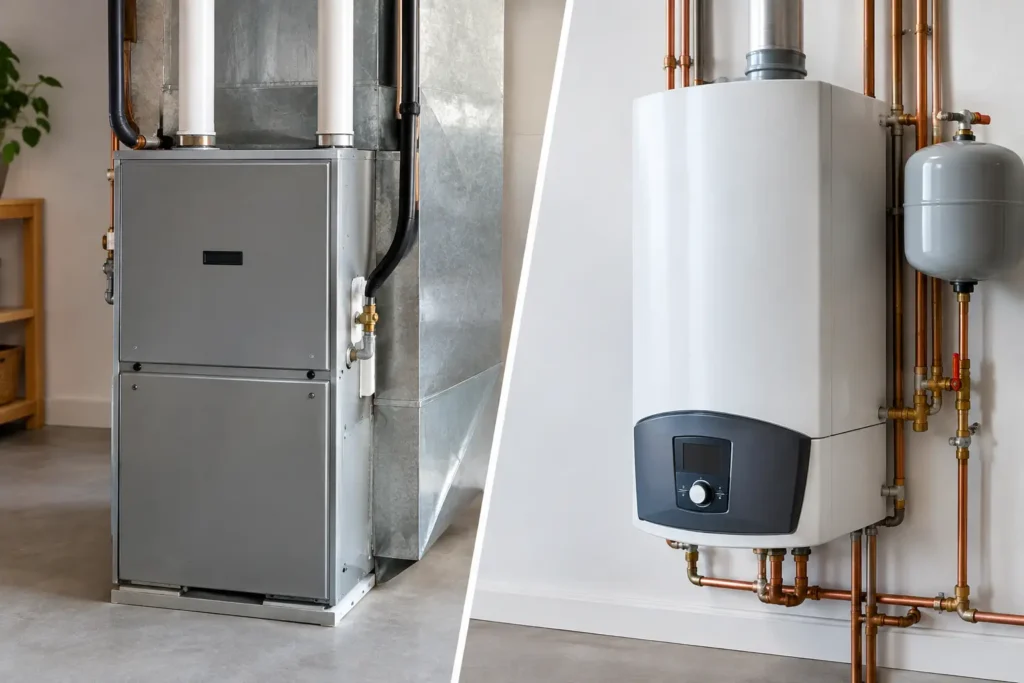
A heating system can be working and still be the wrong fit. Maybe certain rooms stay cold, winter utility bills keep climbing, or a repair quote has made replacement impossible to ignore. When comparing furnace versus boiler heating, the better choice depends on your building, existing equipment, comfort expectations, fuel source, and long-term plans – not simply which system is more efficient on paper.
For homes, rental properties, and commercial spaces, the decision also affects how quickly repairs can be completed, how much disruption a replacement creates, and whether cooling or hot-water upgrades are part of the same project. A licensed heating contractor can assess the full system before recommending a path forward.
Furnace Versus Boiler Heating: The Core Difference
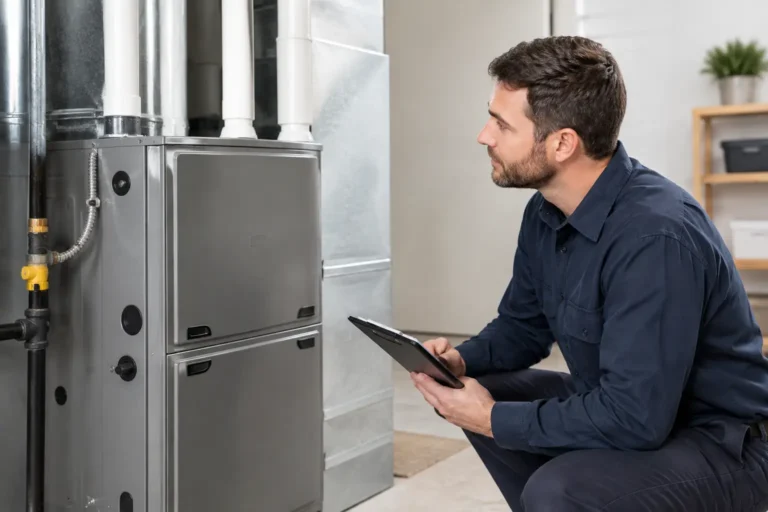
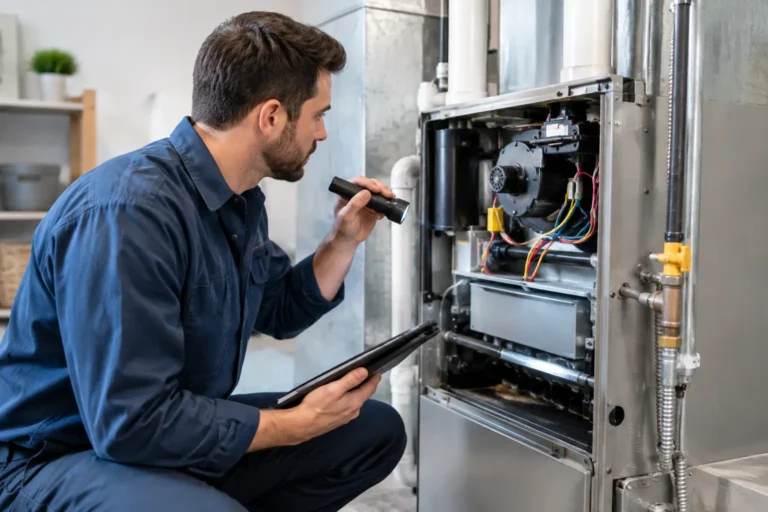
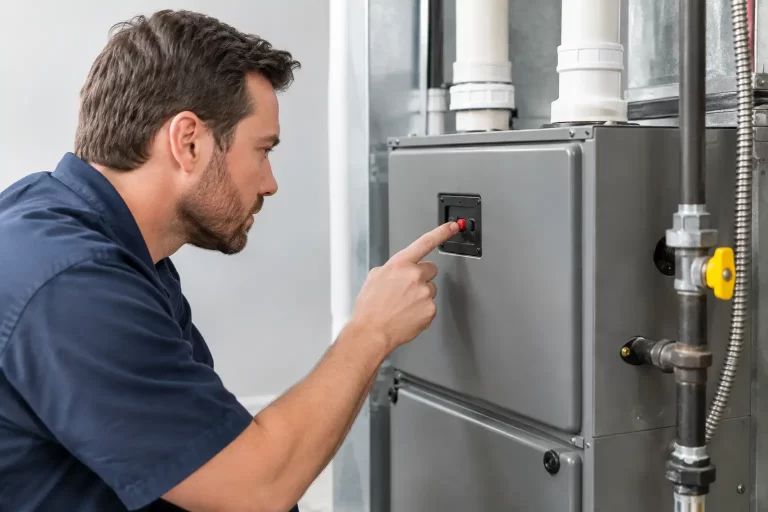
A furnace heats air and moves it through ductwork using a blower. Most furnaces in this region use natural gas, although electric models are available. The warmed air travels through supply vents, while return vents bring cooler air back to the furnace to be heated again.
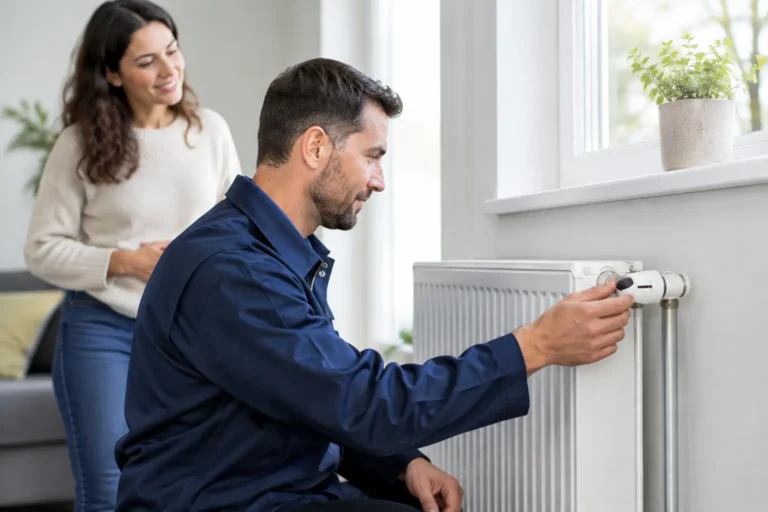
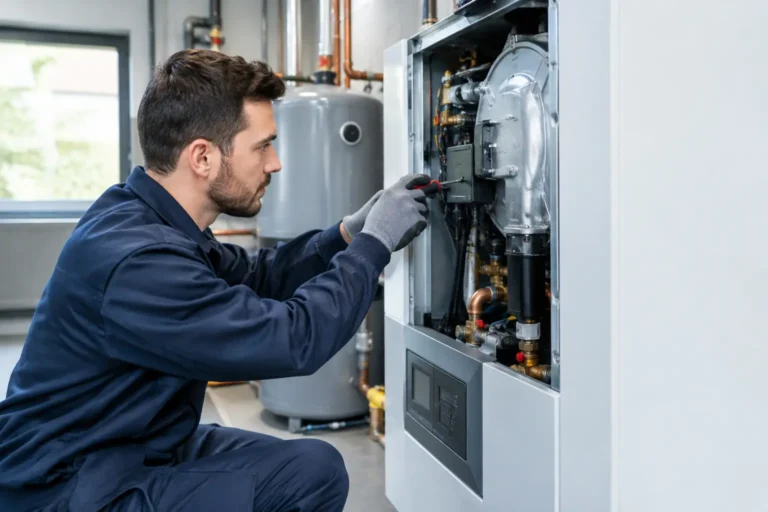
A boiler heats water, then circulates that water through radiators, baseboards, in-floor tubing, or other hydronic heating equipment. It does not use forced air ducts to heat the building. Some boilers also provide domestic hot water, though this depends on the equipment design and how the system is installed.
Neither approach is automatically better. A high-efficiency furnace can be an excellent, practical option in a home with sound ductwork. A properly designed boiler can provide exceptionally even, quiet radiant heat. The right answer starts with what is already in the building and what needs to improve.
When a Furnace Makes More Sense
A furnace is often the most straightforward choice for homes that already have ducts. Keeping and using functioning ductwork usually avoids the major cost and construction involved in converting to a hydronic system. Furnaces also respond quickly when the thermostat is raised, which many families appreciate on cold mornings or after returning from travel.
Forced-air heating has another practical advantage: the same duct system can support central air conditioning. It can also work with some heat pump configurations, allowing one distribution system to handle year-round comfort. If your goal is to replace an aging furnace while preparing for a future cooling or heat-pump upgrade, this flexibility matters.
Modern high-efficiency gas furnaces can reduce fuel waste significantly compared with older equipment. However, a furnace’s real performance depends on more than its efficiency rating. Leaky ducts, poor return-air design, incorrect equipment sizing, dirty filters, and weak airflow can leave a new furnace underperforming.
Furnaces do require routine attention. Filters need regular replacement, blower components need service, and gas combustion equipment needs professional inspection for safe operation. If you smell gas, notice soot, hear unusual banging, or your carbon monoxide alarm activates, leave the area if necessary and arrange qualified emergency service immediately.
Furnace comfort considerations
Forced air can create small temperature swings because the system heats in cycles. Some homeowners notice warm air near supply registers and cooler areas farther away. Good duct design, balanced airflow, zoning, and a properly selected thermostat can improve this considerably.
Furnaces also move air throughout the building. That can be helpful when paired with quality filtration, but it means dust and allergens may circulate if filters are neglected or ductwork is dirty. For occupants with respiratory concerns, ask about filtration, ventilation, and humidity control as part of the heating discussion.
When a Boiler Is the Better Fit
Boilers are a strong option for properties with existing radiators, hydronic baseboards, or in-floor radiant heating. In most cases, replacing an aging boiler with a properly sized modern unit is far more practical than removing the hydronic system and installing ducts throughout the building.
The comfort of boiler heat is different from forced air. Radiators and radiant floors warm surfaces and spaces gradually, creating steady heat without blower noise or air movement. In-floor systems are especially valued in bathrooms, basements, and open living areas where cold floors are a regular complaint.
Boilers can also be a good choice for multifamily and commercial properties where heating zones need to operate independently. Different suites, offices, or floors may have different occupancy schedules and heat requirements. A thoughtfully designed hydronic system can give property managers better zone control while limiting disruption to occupants.
That said, boiler heat is not always quick. Radiant slabs and water-based systems take time to warm up and cool down. This steady operation is comfortable, but it may not suit people who expect immediate temperature changes from the thermostat.
Boiler maintenance and repair needs
Boilers need annual professional service to check combustion, venting, pressure, controls, pumps, safety valves, and water quality. Water leaks, air trapped in the system, failed circulator pumps, ignition issues, and pressure loss can affect heating performance. These systems should be serviced by qualified professionals because the work can involve gas piping, combustion, electrical controls, and pressurized hot water.
A boiler replacement may also require decisions about your domestic hot water. If an older boiler serves both space heating and hot water, a new boiler, indirect tank, tankless unit, or heat pump water heater may be part of the replacement plan. Available government incentives for heat pumps and heat pump water heaters can help some property owners consider an efficient upgrade, but program eligibility, installation requirements, and funding levels can change.
Cost: Look Beyond the Equipment Price
Comparing furnace versus boiler heating only by the initial equipment quote can lead to expensive surprises. A furnace replacement may be less involved when ducts, gas lines, electrical service, and venting are already suitable. A boiler replacement can be efficient and cost-effective when the existing hydronic distribution system is in good condition.
The larger cost appears when changing system types. Adding ducts to a boiler-heated home can require wall and ceiling access, bulkheads, register placement, and significant finishing work. Converting a forced-air home to boiler heat may require new piping, radiators or floor tubing, and careful layout changes. Either project can make sense during a major renovation, but it is rarely a simple equipment swap.
Operating cost depends on local utility rates, equipment efficiency, insulation, air sealing, thermostat use, and system condition. A high-efficiency rating is valuable, but it cannot compensate for a drafty building envelope or neglected distribution system. Before replacing equipment, ask for an assessment of the heating load and the condition of your ducts or hydronic piping.
Questions to Answer Before You Replace Your System
Start with the problem you are trying to solve. If your furnace is noisy but heats reliably, a repair, airflow correction, or filter upgrade may be enough. If your boiler has repeated leaks, unreliable heat, or difficult-to-source parts, replacement planning may be the safer financial choice.
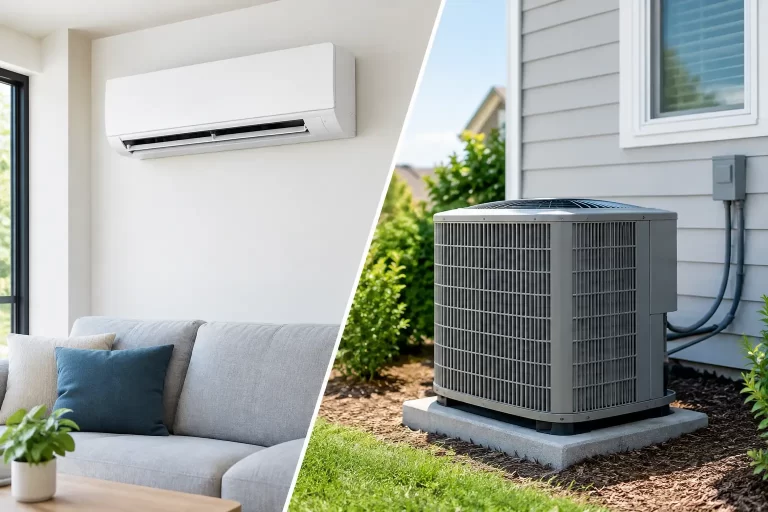
Consider whether you need cooling. A furnace-based duct system can make central air conditioning or a ducted heat pump easier to add. A boiler-heated home can still use cooling through ductless mini-splits or separate heat-pump systems, which may be ideal for targeted areas or homes without space for ducts.
For landlords and property managers, consider service access and tenant disruption. A like-for-like replacement often limits downtime. If a building has multiple zones, aging controls, or recurring calls from the same suites, use the replacement project to address the underlying distribution issues rather than replacing only the heat source.
Finally, do not accept a size recommendation based solely on the old unit’s capacity. Older systems are often oversized. Proper sizing should account for the building, insulation, windows, layout, fuel type, and current comfort concerns.
Get a Clear Plan Before the Cold Weather Arrives
Whether you have a furnace that will not start or a boiler that is losing pressure, the priority is safe, dependable heat. FlameCo Heating Services can assess furnaces, boilers, gas equipment, heat pumps, hot-water systems, and related comfort concerns across the Lower Mainland, with licensed, bonded, and insured service and clear pricing before work begins.
The best replacement is the one that fits your property and gives you dependable comfort without creating unnecessary future costs. Addressing the decision before a winter breakdown gives you time to compare options, review upgrade incentives, and choose the system that serves your home or building well for years to come.