A water heater usually gets attention only when the shower turns cold, the tank starts leaking, or utility bills climb without a clear reason. When replacement time arrives, the tankless versus storage water heater decision affects more than your monthly gas use. It determines how much hot water your household can rely on, what the installation will involve, and how prepared your property is for busy mornings, tenant turnover, or commercial demand.
For homes and buildings across Maple Ridge and the Lower Mainland, there is no one-size-fits-all answer. A correctly sized storage tank remains the right choice for many properties. A tankless unit can be an excellent long-term upgrade when demand patterns, gas capacity, venting, and budget support it. The best decision begins with how your property actually uses hot water.
Tankless Versus Storage Water Heater: The Main Difference
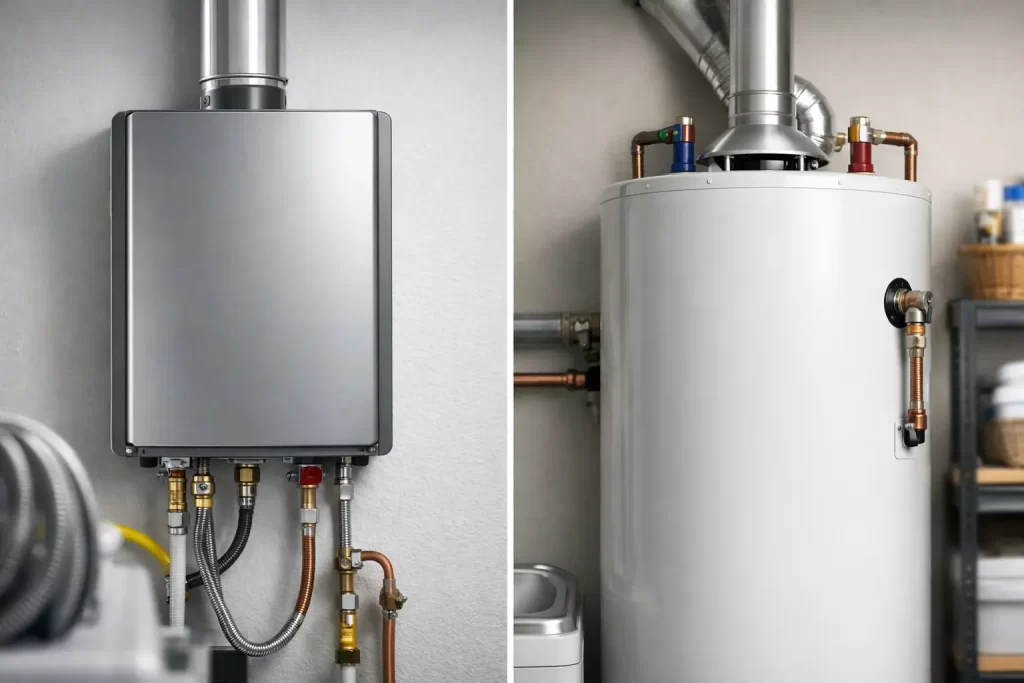
A conventional storage water heater keeps a supply of water hot in an insulated tank, typically 40 to 75 gallons in a home. When someone opens a hot-water fixture, heated water leaves the tank and incoming cold water takes its place. The burner or electric elements then reheat the new water. It is a simple, familiar system that can deliver a strong volume of hot water until the stored supply is depleted.
A tankless water heater heats water only when there is demand. Cold water passes through a heat exchanger and is warmed as it flows to the shower, sink, or appliance. Because there is no stored tank of hot water to run out of, a properly sized unit can provide hot water for as long as the demand continues.
That “properly sized” detail matters. Tankless does not automatically mean unlimited hot water for every fixture at once. Its capacity is measured by flow rate and temperature rise. In Lower Mainland winters, incoming water is colder, so the unit must work harder to raise it to the set temperature. A small tankless unit may handle one shower well but struggle if a second shower, dishwasher, and laundry load start at the same time.
When a Storage Water Heater Makes Sense
A storage tank is often the practical, cost-conscious replacement for a home with an existing tank system. The upfront equipment and installation cost is generally lower, especially when the existing gas line, venting, drain pan, and plumbing connections are in good condition.
Storage tanks also handle short periods of high demand well. A family may run two showers back-to-back, fill a bathtub, and use the dishwasher in the evening. With the right tank capacity and recovery rate, the stored reserve helps meet that peak without requiring a major gas-line upgrade.
For landlords and property managers, a standard tank can be a straightforward choice when a failed unit needs prompt replacement and the building already has a suitable setup. Technicians can often match the existing fuel type, capacity, and venting arrangement while bringing the installation up to current safety requirements.
The trade-off is standby heat loss. Even with modern insulation, the tank must periodically reheat stored water when nobody is using it. Tanks also have a finite service life and can eventually corrode or leak. Sediment buildup can reduce efficiency and contribute to noise, slow recovery, or early failure, particularly where maintenance has been skipped.
Where Tankless Water Heaters Earn Their Cost
Tankless systems are attractive for households that want longer-duration hot water and lower fuel use during periods of light demand. Since they do not hold a full tank at temperature all day, they can reduce energy wasted on standby heating. The savings vary with household habits, fuel prices, and the efficiency of the equipment being replaced.
Space is another advantage. A wall-mounted tankless unit can free up valuable floor area in a mechanical room, closet, garage, or utility space. That can be especially useful in condos, suites, smaller homes, and commercial spaces where every square foot matters.
Tankless equipment can also be a strong fit for properties with consistent hot-water use rather than one extreme demand event. A couple who take staggered showers, a family that wants a longer shower without waiting for a tank to recover, or a small business with regular handwashing demand may benefit from the continuous heating approach.
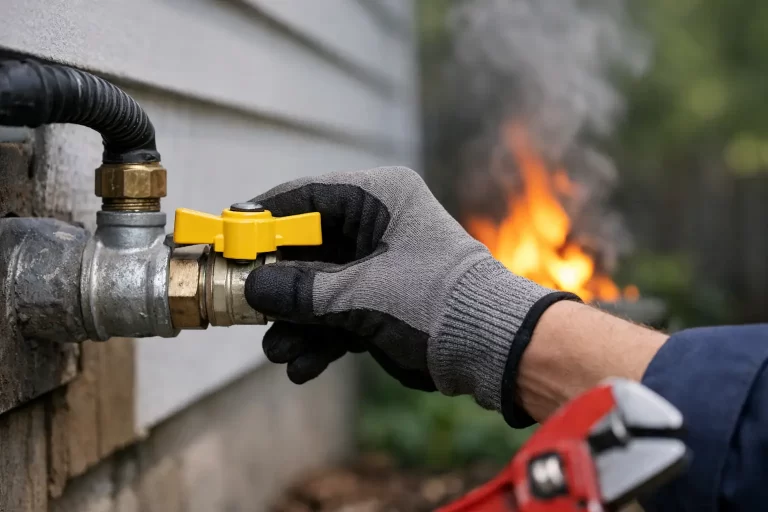
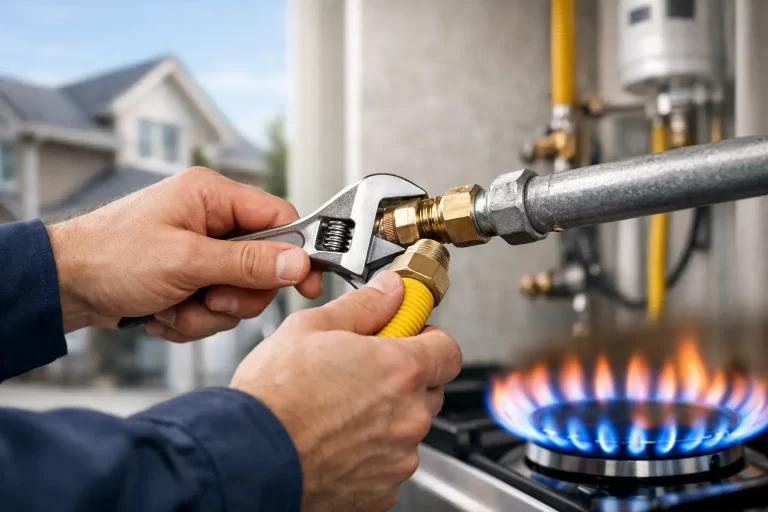
However, the equipment cost is only part of the project. High-output gas tankless heaters often require a larger gas line than the one serving an existing tank. New venting, condensate drainage for high-efficiency models, electrical power, and plumbing changes may also be required. If the home has a furnace, fireplace, range, or other gas appliances, a licensed contractor should calculate total gas demand rather than assuming the existing line has enough capacity.
Cost: Look Beyond the Purchase Price
A basic storage water heater is usually less expensive to purchase and install. That makes it appealing when the existing unit has failed unexpectedly or a property owner needs a dependable replacement with minimal disruption.
A tankless installation typically costs more upfront because of the unit itself and possible infrastructure work. In some homes, the added cost is modest. In others, a gas-line upgrade, sidewall venting changes, electrical work, or relocation can significantly change the quote. Transparent pricing matters here: a replacement plan should identify required code and safety work before installation starts, not add surprise costs later.
Over time, a tankless unit may use less energy, but it does not always deliver a fast payback. A household with very low hot-water use may see smaller savings. A large family with steady demand may see more benefit, provided the system is sized to meet simultaneous use. Maintenance costs should also be considered. Tankless units need periodic flushing to remove mineral scale and keep the heat exchanger operating efficiently. Storage tanks benefit from inspection, flushing when appropriate, and timely anode-rod maintenance.
Capacity and Sizing Are More Important Than the Label
Choosing based on “tankless” or “50-gallon tank” alone is where many water-heater purchases go wrong. A qualified assessment should account for the number of occupants, bathrooms, fixtures likely to run together, dishwasher and laundry habits, incoming water temperature, and the desired delivery temperature.
For a storage unit, technicians look at tank volume and first-hour rating. The first-hour rating estimates how much hot water the heater can supply in the first hour of heavy use, including its recovery while operating.
For tankless equipment, the key number is gallons per minute at the expected temperature rise. A unit advertised at a high flow rate may achieve that figure only under warmer incoming-water conditions. Your home’s real demand is what matters. If two showers normally run at the same time, the water heater must be selected for that reality, not for an ideal single-fixture scenario.
In larger homes, multiplexes, or commercial properties, one unit may not be enough. Multiple tankless units, a storage-and-tankless combination, or a commercial hot-water design may provide better reliability and serviceability. Property managers should also consider access for maintenance and the impact of an outage on tenants or operations.
Fuel, Venting, and Safety Considerations
Gas water heaters produce combustion gases that must be vented correctly. A change from a conventional atmospheric tank to a high-efficiency tankless model can change the vent material, route, termination location, and condensate requirements. Gas piping must be properly sized, tested, and installed by qualified professionals.
Electric tankless units can avoid gas venting but often demand substantial electrical capacity. In many whole-home applications, the panel and service may need upgrades. They can be suitable in specific situations, but they should not be chosen simply because the unit appears compact.
For either type, installation should include required safety components such as pressure relief protection, proper drainage where applicable, secure connections, and code-compliant venting or electrical work. A leaking tank, gas odor, combustion concern, or repeated ignition failure should be treated as a service issue, not a do-it-yourself project.
Consider a Heat Pump Water Heater Too
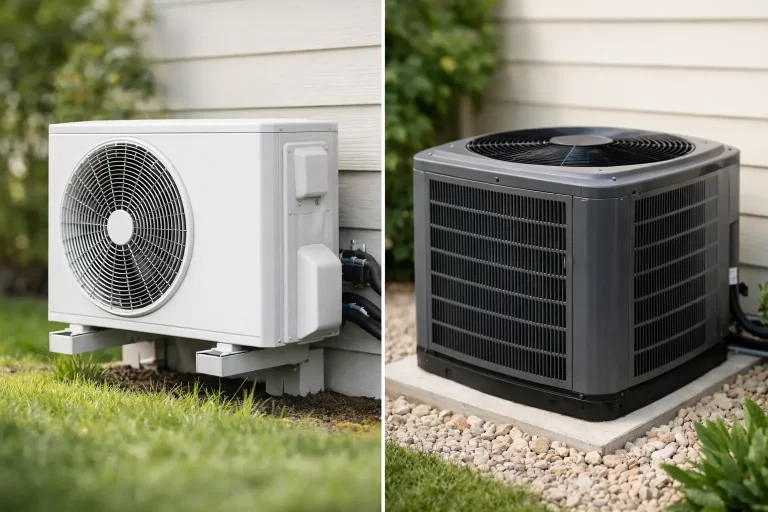
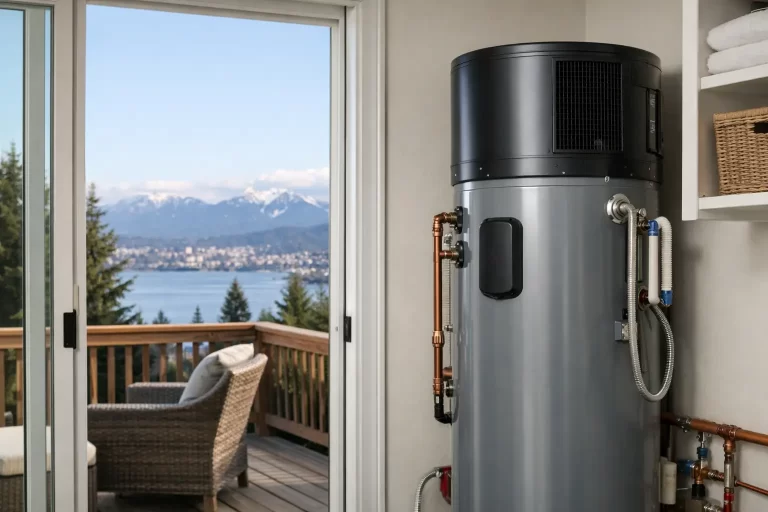
The choice is not always limited to gas tankless or conventional storage. Heat pump water heaters use electricity to move heat into stored water and can be highly efficient. They usually need more installation space than a tankless unit and work best in locations with adequate surrounding air, such as a garage, basement, or utility room.
They can cool and dehumidify the area around them, which may be helpful in some spaces and unwanted in others. Their recovery can be slower in heat-pump-only mode, so sizing and operating mode need attention for larger households. Available government incentives and rebate programs may improve the economics of a heat pump water-heater upgrade, but eligibility, equipment requirements, and funding levels can change. Confirm current program details before making a purchase decision.
Choosing the Right Replacement for Your Property
Choose a storage water heater when you need a lower upfront cost, have an existing tank setup, and want dependable performance for predictable peak demand. Choose tankless when you value space savings, long-duration hot water, and potential energy savings, and your property can support the required gas, venting, or electrical upgrades.
If your current heater is leaking, producing rusty water, failing to ignite, or no longer meeting demand, do not wait for a full breakdown. FlameCo Heating Services can assess the existing installation, explain the practical options, and provide a clear quote for a safe replacement. The right water heater is the one sized for your real demand, installed to code, and ready when the next busy morning begins.