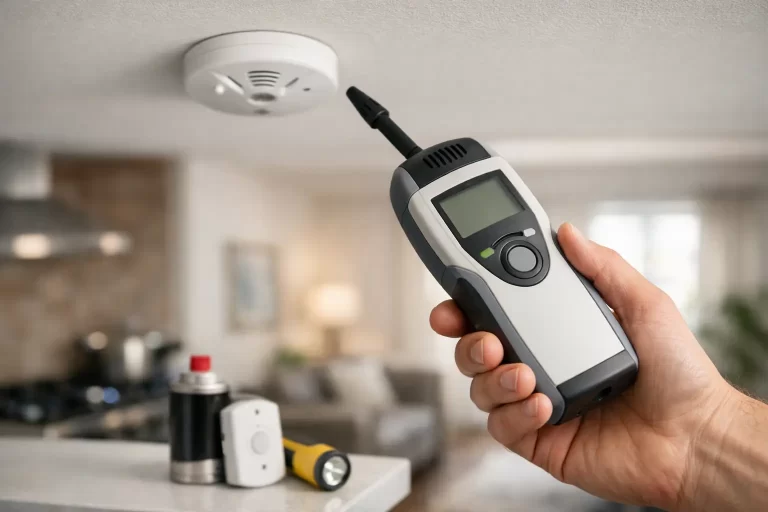
A gas smell is not a wait-and-see problem. If you smell rotten eggs, hear hissing near a gas line, or suspect a leak, knowing how to shut off gas can protect people and property. The first priority is always getting everyone to a safe location. Shut off the gas only if you can do it without putting yourself at risk.
Decide Whether to Leave Before You Touch Anything
Natural gas is odorless, so utilities add a sulfur-like odorant to make leaks easier to detect. A faint smell near an appliance can sometimes point to a pilot-light or connection issue. A strong odor throughout the home, a hissing sound, dead or discolored vegetation near an outdoor gas line, or bubbles in standing water can indicate a more serious leak.
If the smell is strong, you hear gas escaping, or anyone feels dizzy, nauseated, or short of breath, leave immediately. Get household members, tenants, customers, and pets out of the building. Do not spend time opening windows, collecting belongings, or searching for the source.
Once you are away from the area, call 911, the fire department, or your gas utility’s emergency line. Call from a neighbor’s home, a safe distance outdoors, or another location away from the suspected leak.
Do not create a spark while you are inside or close to the building. That means no light switches, appliance switches, garage-door openers, flashlights, phones, lighters, cigarettes, or vehicle ignition. Even a small electrical spark can ignite accumulated gas.
How to Shut Off Gas at the Meter
The gas meter is usually outside, near the front, side, or rear of the building. In some multi-unit properties, meters may be grouped in a utility room, parking area, meter bank, or exterior enclosure. Find your meter before an emergency happens, and make sure responsible adults or building staff know where it is.
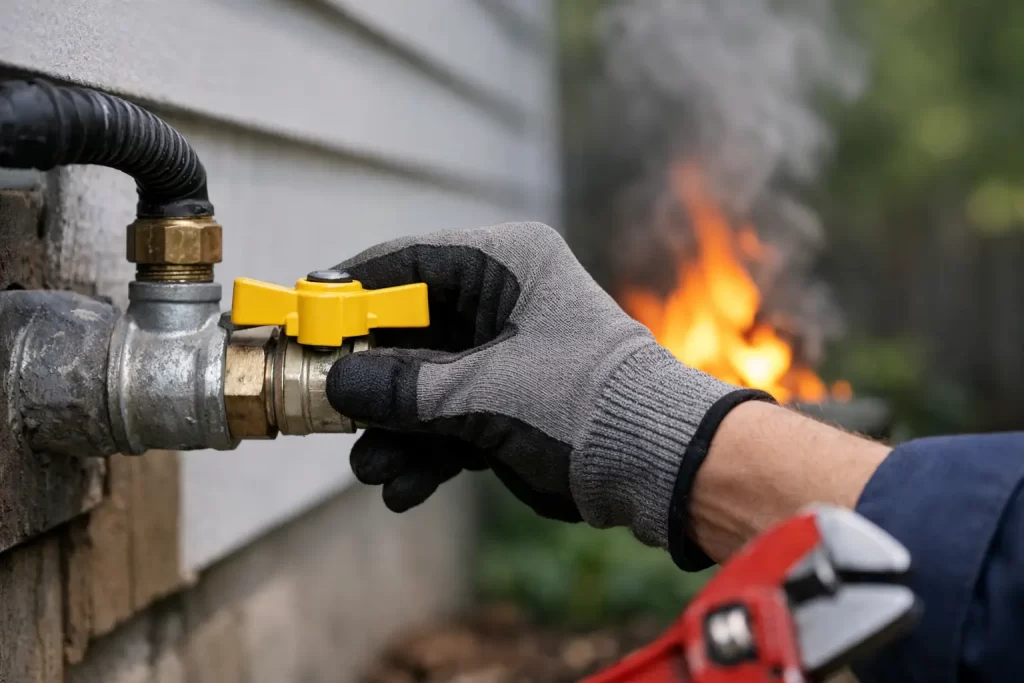
The main shutoff valve is typically located on the pipe entering the meter. It has a rectangular metal tab or a lever-like fitting. When the tab is parallel with the pipe, the gas is generally on. When it is turned a quarter turn so it sits crosswise to the pipe, the gas is off.
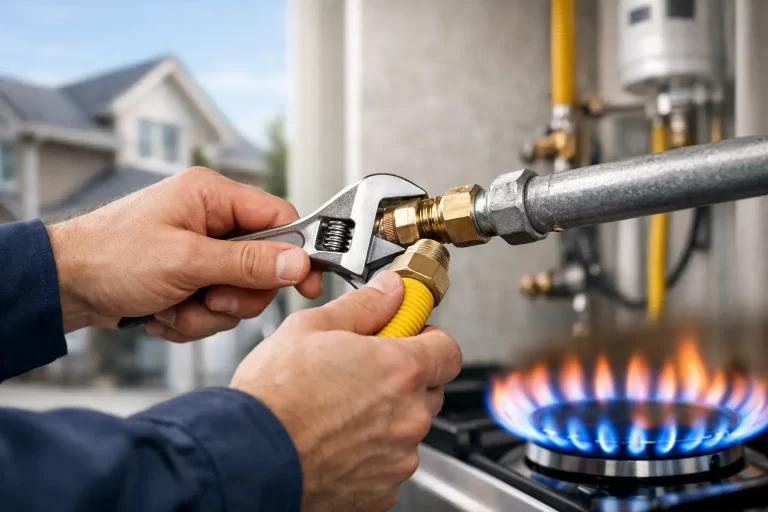
If conditions are safe and the valve is accessible, use an adjustable wrench or a gas shutoff tool to turn the valve one-quarter turn. Do not force a seized valve. Do not use excessive strength, climb over damaged equipment, or remain near a strong odor to complete the task. If the valve will not move easily, leave the area and let emergency responders or the gas utility handle it.
A few precautions matter here:
- Shut off the main meter only for a suspected leak, fire risk, serious damage, or when emergency officials instruct you to do so.
- Keep the correct shutoff tool in an accessible location, not locked in a shed or buried in a toolbox.
- Do not try to repair a pipe, fitting, meter, or valve after turning the gas off.
- Never turn the gas back on yourself after the main meter has been shut off.
Turning off gas at the meter stops fuel flow to the entire property. Furnaces, boilers, fireplaces, water heaters, ranges, dryers, pool heaters, and other gas appliances will no longer operate. That is the right outcome during a suspected emergency, but it also means the system needs a qualified inspection before service is restored.
Shutting Off Gas to One Appliance
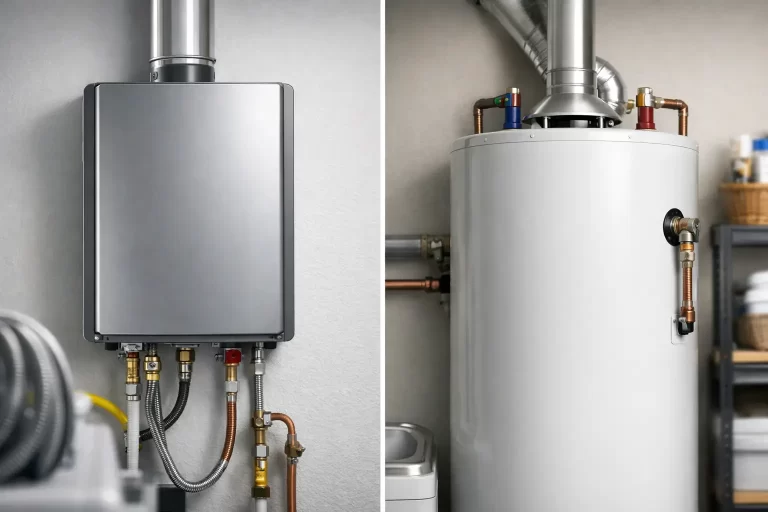
A localized issue does not always require shutting off the entire property. Most gas appliances have an individual service valve on the supply pipe nearby. A furnace shutoff valve may be beside the unit. A gas range valve is often behind the appliance or inside the adjacent cabinet. A water heater valve is usually on the gas line above or beside the unit.
Turning an appliance valve a quarter turn so it is perpendicular to the pipe usually stops gas to that single appliance. This can be appropriate if there is a clear, minor appliance-specific concern and no gas odor spreading through the building.
However, do not move a heavy range, remove panels, disconnect gas lines, or attempt to troubleshoot combustion equipment while gas is present. If you are unsure whether the problem is isolated, treat it as a broader leak: evacuate, call for help, and leave the main shutoff decision to a trained professional or emergency responder.
What to Do After the Gas Is Off
Closing a valve does not mean the hazard is over. Gas may still be present in the air, and the cause of the leak still needs to be found. Stay outside until the fire department, gas utility, or qualified gas technician says it is safe to return.
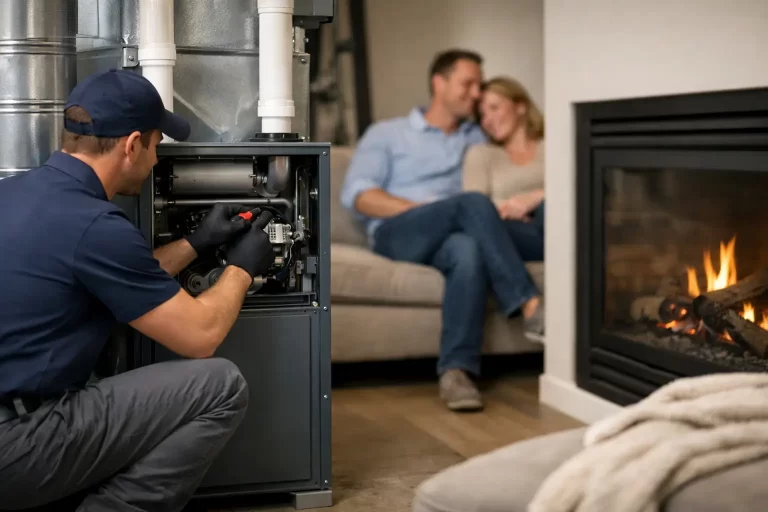
Do not relight pilots or restart appliances. Modern furnaces and boilers often use electronic ignition, but they still require correct gas pressure, safe venting, and proper combustion checks before operation. Water heaters, fireplaces, dryers, ranges, and older equipment with standing pilots need the same caution.
A qualified technician should identify why gas was shut off. The issue could be a loose appliance connector, a failed valve, damaged piping, a venting problem, an ignition fault, or an appliance that is no longer operating safely. The repair may be straightforward, but guessing is not worth the risk.
For homeowners, this is also a useful time to consider the age and condition of gas-fired equipment. Repeated repairs, unreliable ignition, corrosion, poor heating performance, or rising operating costs may point to a replacement decision rather than another temporary fix. The right choice depends on the equipment, repair scope, home layout, and available energy-upgrade options.
Landlords, Property Managers, and Commercial Sites
Property managers need a clear gas emergency procedure that staff and tenants can follow without improvising. Keep meter locations documented, identify who has authority to make emergency calls, and make sure common utility areas remain accessible. In larger buildings, one meter may serve several suites, so shutting off gas can affect many occupants.
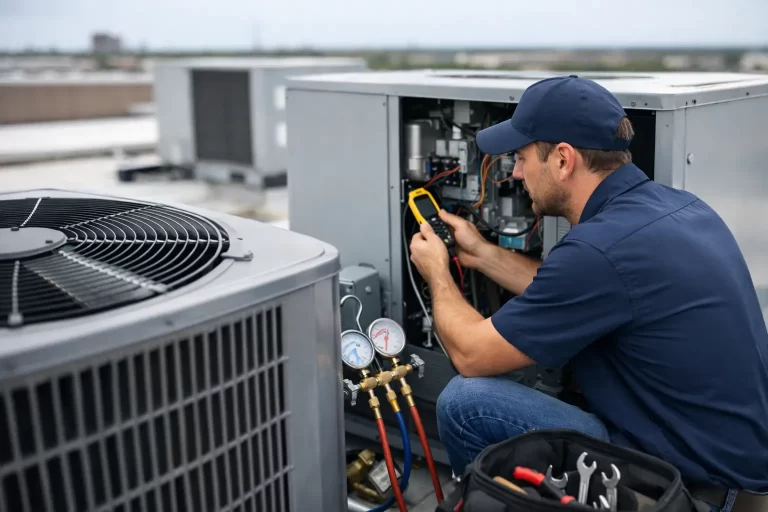
For restaurants, retail spaces, apartment buildings, and other commercial properties, do not assume a kitchen or mechanical-room odor is routine. Gas-fired rooftop units, boilers, makeup-air systems, water heaters, and commercial cooking equipment all need qualified service. Prompt action can reduce downtime, protect tenants and staff, and prevent a minor equipment issue from becoming a building emergency.
Do Not Turn the Main Gas Back On Yourself
This is the step many people overlook. Once the meter valve is closed, do not reopen it yourself. Restoring gas may require leak testing, pressure verification, appliance safety checks, and relighting or resetting equipment correctly. A gas utility may need to restore service at the meter, while a licensed gas professional addresses the piping or appliance issue that caused the shutdown.
For properties in Maple Ridge, Metro Vancouver, and the Lower Mainland, FlameCo Heating Services can inspect gas appliances and connected comfort equipment after an emergency, with licensed, bonded, and insured service under license LGA202344. If the gas smell is active or severe, call emergency services or the gas utility first, then arrange qualified repair after the site is cleared.
A gas shutoff valve is a safety tool, not a repair solution. Find yours before you need it, keep the area accessible, and act early when something does not smell or sound right.