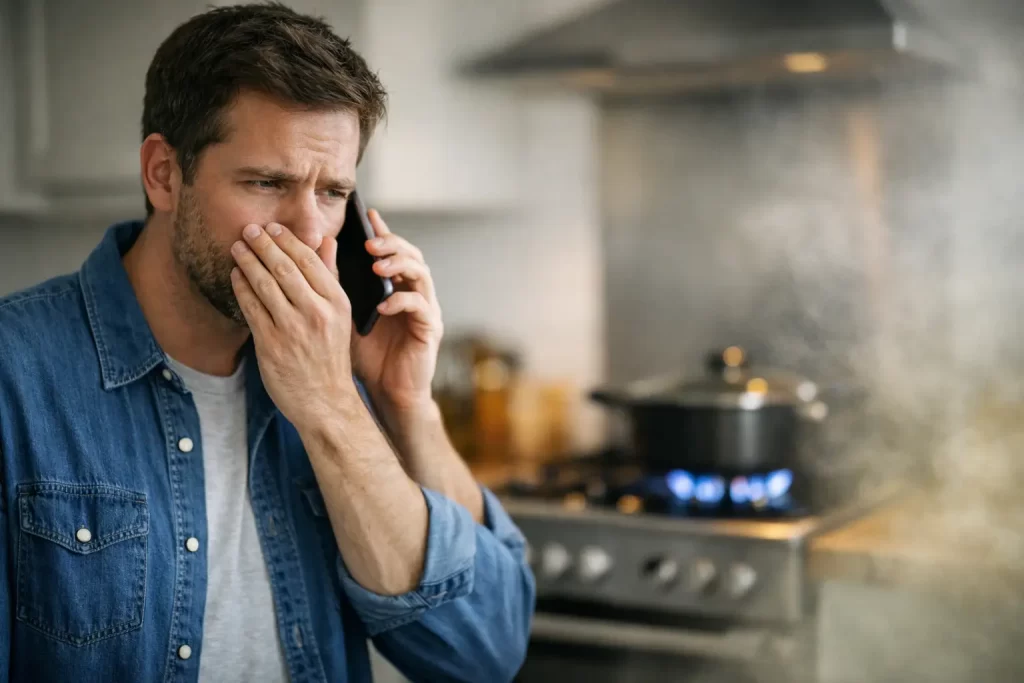
A natural-gas odor inside a home is not a problem to troubleshoot from the kitchen. If you are wondering what to do if you smell gas in your house, treat it as a possible leak, get everyone outside right away, and make emergency calls only once you are a safe distance from the building.
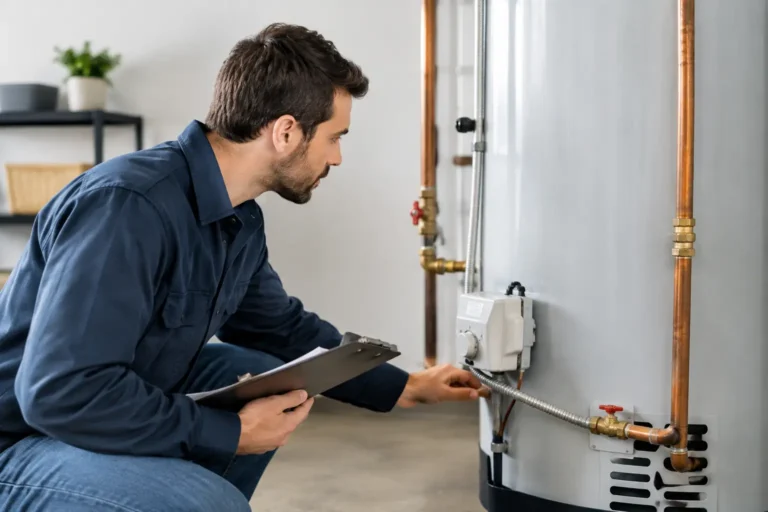
Natural gas is odorless on its own. Utilities add a sulfur-like odorant so leaks can be detected before they become dangerous. People describe it as rotten eggs, sulfur, skunk-like, or a strong chemical smell. Even a faint odor deserves caution, especially near a furnace, water heater, fireplace, stove, boiler, dryer, or gas line.
What to Do If You Smell Gas in Your House
Leave the building immediately. Take people and pets with you, but do not spend time gathering belongings, opening windows, or trying to find the source. If possible, move well away from the home and keep others from entering.
Once you are outside and at a safe distance, call 911, the fire department, or your gas utility’s emergency line. Follow their instructions. If the odor is strong, you hear hissing, or anyone feels unwell, make that clear when you call.
Do not re-enter the home until emergency responders or the gas utility tell you it is safe. A smell that seems to fade after you leave does not confirm that the leak is gone. Gas can collect in enclosed areas, and the source may be intermittent.
Do Not Create a Spark
A gas leak can ignite from a small electrical spark. The safest choice is to leave first and avoid doing anything that could create one while indoors.
Do not turn lights, fans, range hoods, thermostats, or other electrical switches on or off. Do not plug in or unplug appliances. Do not use a flashlight, garage-door opener, doorbell, or elevator. Avoid using a phone inside the house, including calling for help from a room where you smell gas.
Do not smoke, light a match, use a lighter, start a vehicle in an attached garage, or try to relight a pilot light. Avoid starting equipment such as a furnace, fireplace, water heater, or gas stove to see whether it still works.
You should also avoid attempting a repair. Do not tighten fittings, take apart an appliance, spray products around connections, or test the area with an open flame. Gas systems require qualified diagnosis and repair after the immediate danger has been addressed.
Should You Shut Off the Gas?
If you know exactly where the exterior gas shutoff is and can reach it without entering or remaining near the building, shutting it off may be appropriate. However, leaving the area and calling emergency services comes first. Do not delay evacuation to locate a valve, and do not attempt to shut off a meter if you are unsure how to do it safely.
In many situations, the gas utility or fire department will isolate the supply. Once a gas meter valve has been shut off, it often must be turned back on by the utility or a qualified professional. Turning it back on without proper checks can create another hazard.
Propane systems need the same level of caution. Propane is heavier than air and can settle in low areas such as basements, crawl spaces, and garages. If you smell propane, leave the area and call for emergency help from outside.
Signs That Make a Gas Leak More Urgent
Any indoor gas odor calls for action, but several signs can point to a larger or more immediate leak. Hissing or whistling near a gas pipe, appliance, meter, or outdoor line is especially serious. So is a strong odor that intensifies quickly, a smell near a closed room or basement, or an odor outdoors near the meter.
Physical symptoms also matter. Headache, dizziness, nausea, unusual fatigue, confusion, or trouble breathing may have several causes, but they should never be ignored around a suspected gas leak. Move into fresh air, call 911, and seek medical assistance if symptoms are severe or do not improve.
Natural gas itself is not usually poisonous in small amounts, but it can displace oxygen in an enclosed space. It also presents a fire and explosion risk. Carbon monoxide is a separate danger produced by incomplete combustion. It has no smell, so you cannot rely on your nose to detect it.
Gas Smell or Carbon Monoxide Problem?
A rotten-egg odor suggests a possible natural-gas or propane leak. Carbon monoxide does not smell like gas, smoke, or exhaust. If a carbon monoxide alarm sounds, leave the building immediately, call 911 from outside, and do not go back in until responders say it is safe.
Working carbon monoxide alarms should be installed near sleeping areas and on every appropriate level of the home. They are particularly important in homes with gas furnaces, boilers, fireplaces, water heaters, gas ranges, or attached garages. Test alarms regularly and replace them according to the manufacturer’s instructions.
A yellow or flickering flame on a gas appliance can also indicate a combustion issue, although it is not proof of a gas leak. Most properly operating natural-gas burner flames are steady and blue. If you notice soot, unusual moisture, repeated pilot outages, or a flame that is not blue, arrange professional service. Do not wait for a stronger odor or an alarm event.
What Happens After the Emergency Call
Emergency responders or the gas utility will assess the immediate hazard and determine whether the gas supply needs to be shut off. They may identify a problem at the meter, service line, or utility equipment. If the issue is on the property’s gas piping or at an appliance, a licensed gas professional will be needed before service can be safely restored.
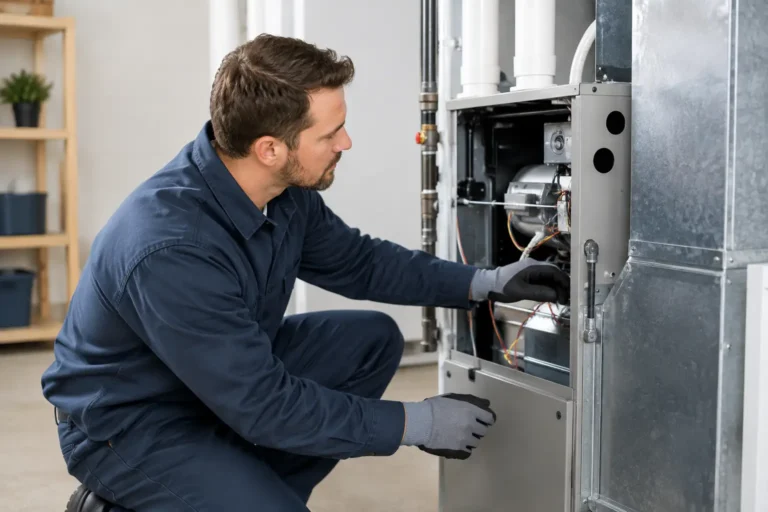
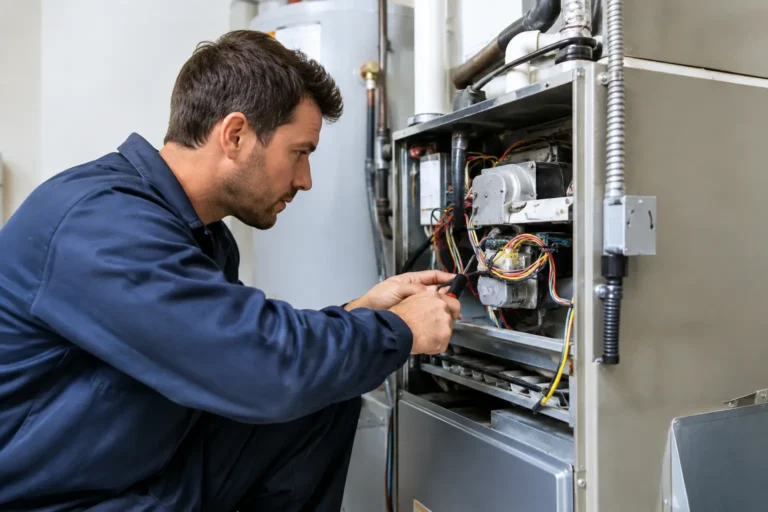
The repair process depends on the cause. A loose connector, damaged flex line, failed appliance valve, aging pipe, blocked vent, or faulty ignition component requires a different solution. A qualified technician should inspect the relevant appliance and gas line, make the necessary repair, test for leaks, and confirm that combustion and venting are operating properly.
For landlords, property managers, and commercial operators, notify occupants promptly and keep them out of the affected area until clearance is given. Do not ask maintenance staff or tenants to investigate a suspected leak unless they are trained and authorized to perform gas work. Document the incident and any emergency instructions for your records.
Preventing Future Gas Concerns
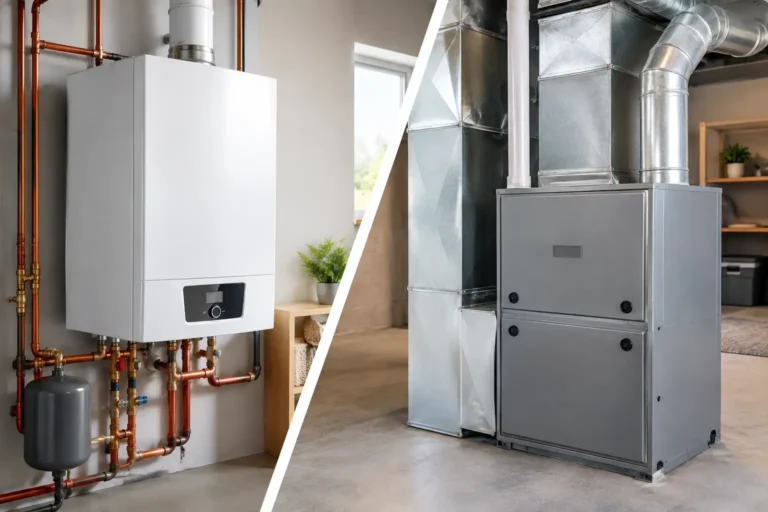
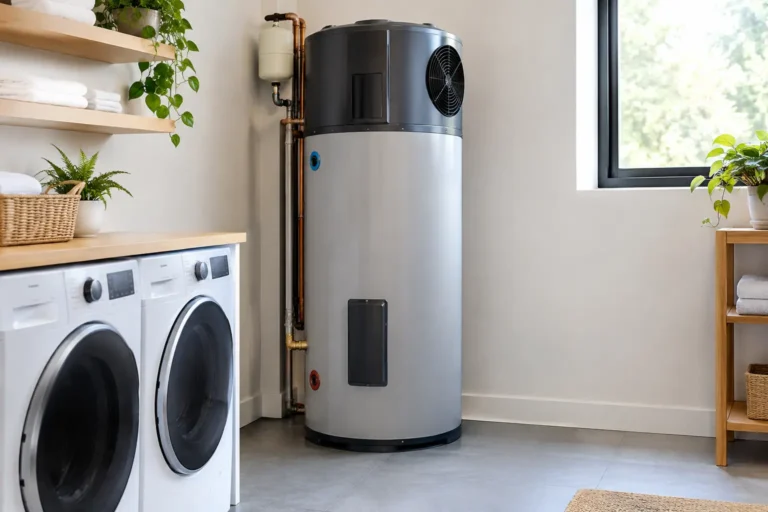
Routine service helps catch developing problems before they become an emergency. Gas furnaces, boilers, fireplaces, water heaters, ranges, and other combustion equipment should be maintained according to manufacturer requirements and local safety standards. Annual inspection is often a practical schedule for heating equipment and fireplaces, particularly before the colder season.
Keep access clear around furnaces, water heaters, meters, and shutoff valves. Do not store paint, gasoline, solvents, or other flammable materials beside gas appliances. If you have recently had appliance work, renovations, or a new gas line installed and notice an odor afterward, treat it as urgent rather than assuming the smell will disappear on its own.
When the emergency has been cleared, a licensed gas contractor can inspect and repair the equipment or piping on your property. FlameCo Heating Services provides qualified gas and HVAC service for homeowners, landlords, and property managers who need a clear repair plan after a gas-related concern.
Your best next step is simple: if you smell gas, leave first, call from outside, and let trained professionals determine when the building and its gas equipment are safe to use again.