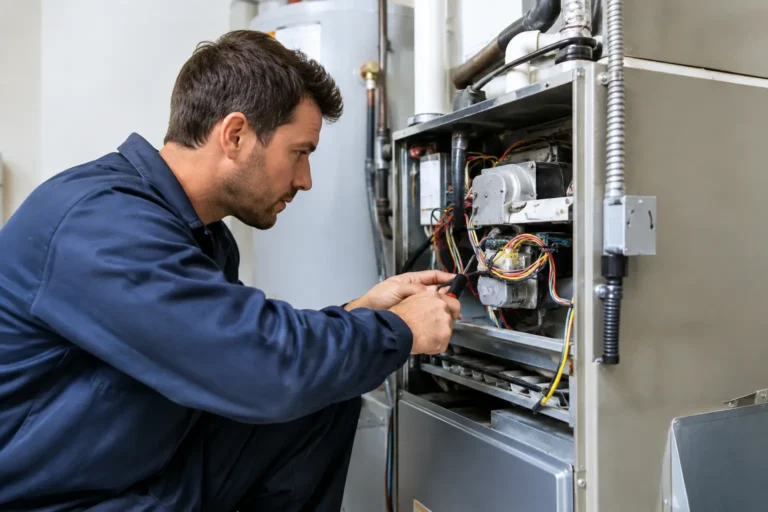
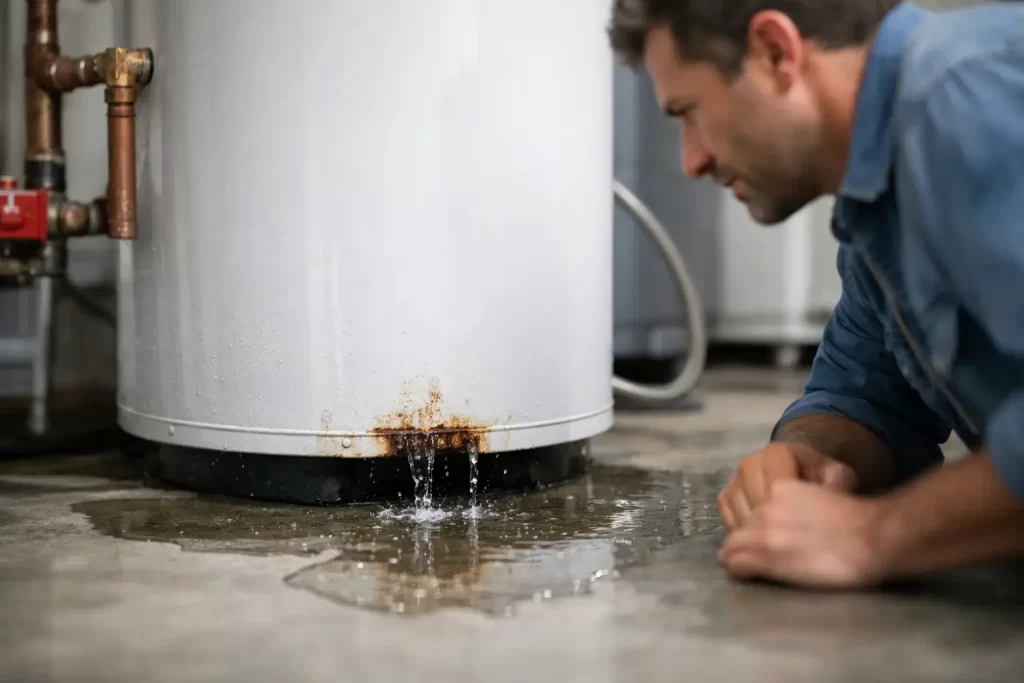
A hot water tank leaking from bottom is not a problem to watch for a few days. A small puddle can come from a simple connection or drain valve, but it can also signal internal tank corrosion that cannot be repaired. Acting early protects your floors, drywall, stored belongings, and hot water supply.
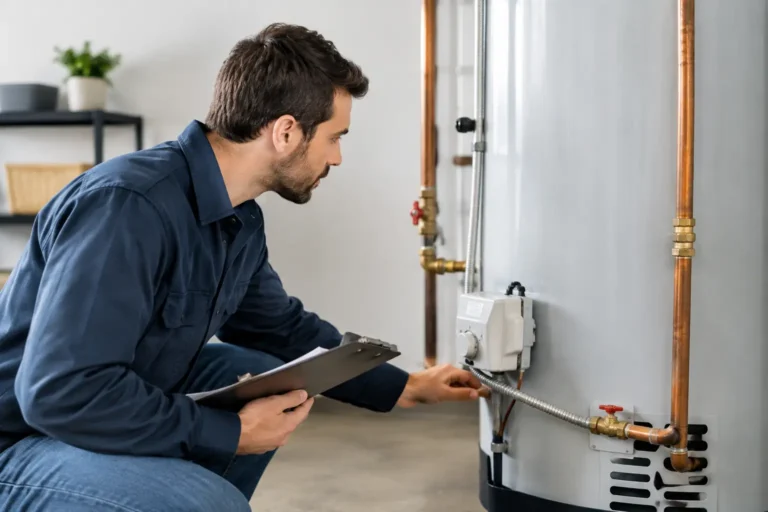
The key is finding where the water is actually starting. Water often runs down the outside of a tank before pooling underneath, which makes the source less obvious. If the tank is actively leaking, turn off the water supply if you can do so safely, protect the surrounding area, and arrange a qualified inspection.
What to Do When Water Is Pooling Under Your Tank
First, keep people clear of standing water near an electric water heater or any electrical outlet. Do not step into water if electrical equipment may be affected. For an electric unit, switch off power at the breaker before touching controls or inspecting close to the tank. For a gas-fired unit, avoid adjusting gas piping or taking apart the burner area.
Next, look for the cold-water shutoff valve above the tank. Turning it clockwise usually stops new water from entering the unit. Open a hot-water faucet elsewhere in the building for a few moments to relieve pressure and confirm the flow is slowing. If you cannot identify the shutoff or the leak is spreading quickly, call for emergency service rather than forcing a valve that may be seized.
Place towels, a shallow pan, or a wet vacuum around the area only after the electrical risk is addressed. Take clear photos of the leak and the tank’s data label if accessible. Those details help a technician assess the unit’s age, capacity, and likely repair options before arriving.
If you smell gas, hear a hissing sound near a gas appliance, or suspect a gas leak, leave the area and contact the gas utility or emergency services from outside. A water heater leak and a gas concern should never be treated as a do-it-yourself repair.
Why a Hot Water Tank Leaks From the Bottom
There are several possible causes, and the location of the water matters. Moisture directly beneath the tank does not automatically mean the tank itself has failed.
A leaking drain valve
The drain valve sits near the bottom of most tank-style water heaters. It is used to drain the tank during service or replacement. A loose cap, worn washer, cracked plastic valve, or mineral buildup can allow water to drip from this point.
This is often repairable. A technician may tighten or replace the valve, depending on the condition of the connection. Do not overtighten a plastic drain valve, as it can crack and turn a drip into a larger leak.
A temperature and pressure relief valve issue
The temperature and pressure relief valve, commonly called the T&P valve, is usually mounted higher on the side or top of the tank. It connects to a discharge pipe that runs downward. If that valve opens or leaks, water can travel down the pipe and collect at the bottom, making it look like the tank is leaking.
The valve may be doing its safety job because water pressure or temperature is too high. It may also be worn out. Replacing only the valve without checking system pressure, expansion control, and thermostat operation can leave the underlying problem unresolved.
Condensation or a nearby plumbing leak
During cold weather, a gas water heater can produce condensation, particularly when it is heating a large volume of cold incoming water. Light condensation may be normal for a short period. Persistent pooling is not something to ignore.
Water can also come from pipes above the tank, a venting issue, a water softener, a furnace drain, or a leaking appliance nearby. Dry the area, then inspect carefully for fresh moisture around fittings and overhead piping. A technician can confirm the source without guessing.
Internal tank corrosion
If water is seeping from the metal tank shell, the internal liner has likely corroded through. This is the most serious and common reason an older hot water tank leaks from the bottom. The tank holds water under pressure, so a pinhole can grow quickly.
A rusted-through tank cannot be patched safely or permanently. Sealants may slow a drip for hours or days, but they do not restore the tank’s pressure vessel. Replacement is the appropriate solution.
How to Tell Whether Repair or Replacement Makes Sense
Age is one of the first factors. Many conventional tank water heaters last roughly 8 to 12 years, although water quality, maintenance, installation quality, and household demand can shorten or extend that range. Check the serial number or installation records if you are unsure how old your unit is.
A relatively new tank with a leaking drain valve, faulty T&P valve, or loose plumbing connection may be worth repairing. An older tank that is corroded, leaking through the base, delivering rusty water, or requiring repeated service usually makes more sense to replace.
Capacity also matters. A replacement is an opportunity to correct a tank that has always been too small, inefficient, or slow to recover during busy mornings. Homes with larger families, soaking tubs, or high simultaneous demand may benefit from a properly sized high-recovery tank or a heat pump water heater.
For landlords and property managers, the cost of delay is broader than the equipment itself. Water damage, tenant disruption, emergency cleanup, and an unplanned loss of hot water can outweigh the price difference between a short-term repair and a planned replacement.
Do Not Ignore These Warning Signs
A leak deserves prompt attention, but some signs make the situation more urgent. Call for service right away if the puddle is expanding, the tank is making popping or rumbling noises, water is rusty, the relief valve is discharging frequently, or the floor around the tank feels soft.
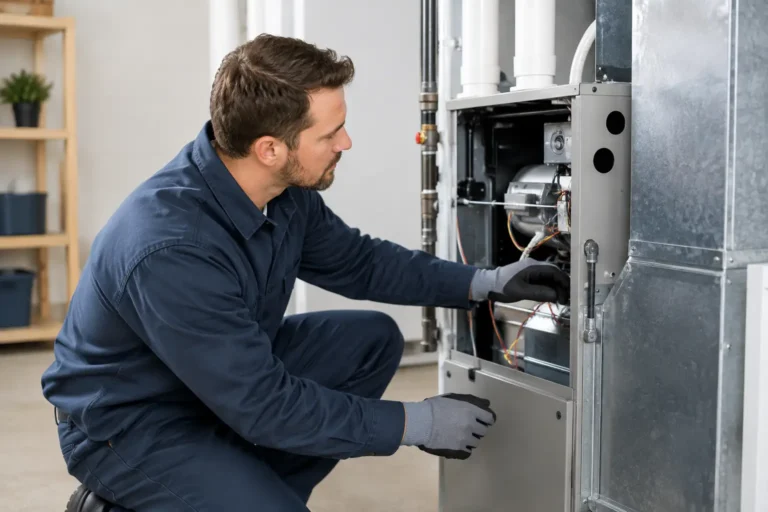
For gas water heaters, unusual burner behavior, soot, a yellow lazy flame, or signs of venting trouble require professional assessment. For electric models, tripped breakers, a burning smell, or water near wiring are reasons to shut off power and avoid using the unit.
Do not drain a heavily corroded tank unless a technician instructs you to do so. Sediment and corrosion can make old valves fail during draining, and moving water through a compromised tank can worsen the leak.
Preventing the Next Leak
Not every tank failure can be prevented, but regular service gives you more control over the timing. Periodic inspections can identify a sweating valve, deteriorating fittings, pressure concerns, sediment buildup, and an aging anode rod before water reaches the floor.
The anode rod is designed to corrode before the steel tank does. Replacing it at the right time can extend tank life, especially in areas with hard or mineral-heavy water. Flushing sediment can also help efficiency, though it should be handled carefully on older units where disturbing buildup may expose existing weakness.
Make sure the tank sits in an appropriate drain pan where required and that the pan drains to a safe location. A pan will not save a failed tank forever, but it can reduce damage from a small leak. If your water heater is in a finished area, mechanical room, closet, or upper-floor space, leak detection and automatic shutoff options are worth considering.
Choosing a Replacement Without Rushing the Decision
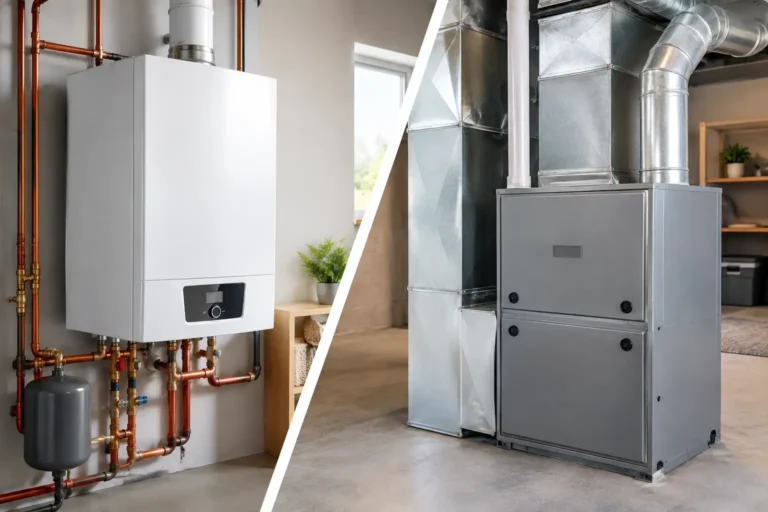
When the tank has failed, you need hot water restored quickly, but you should still receive a clear explanation of your options. The right choice depends on fuel type, available electrical capacity, household demand, venting, space, installation requirements, and long-term operating costs.
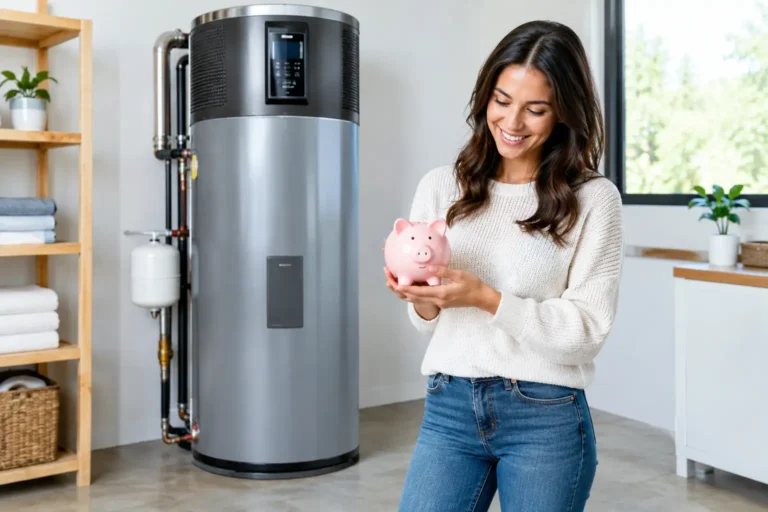
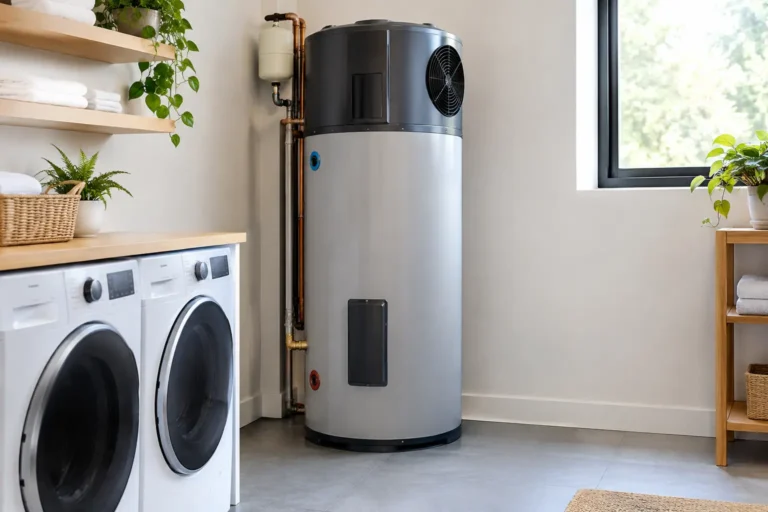
Standard gas and electric tanks remain practical choices for many properties. High-efficiency gas models can reduce energy use where compatible venting is available. Heat pump water heaters use much less electricity than conventional electric tanks, but they need suitable space and can cool and dehumidify the room around them. They may also qualify for available government incentives, depending on the program and installation details.
For Maple Ridge, Metro Vancouver, and Lower Mainland property owners, FlameCo Heating Services can assess the leak, explain whether a safe repair is realistic, and provide transparent replacement options when the tank has reached the end of its life. Licensed, bonded, and insured service matters when water, electricity, gas, and venting may all be involved.
A leaking tank rarely becomes less expensive by waiting. Shut down the water safely, document what you see, and have the source identified before a manageable puddle becomes a damaged room and an urgent replacement decision.