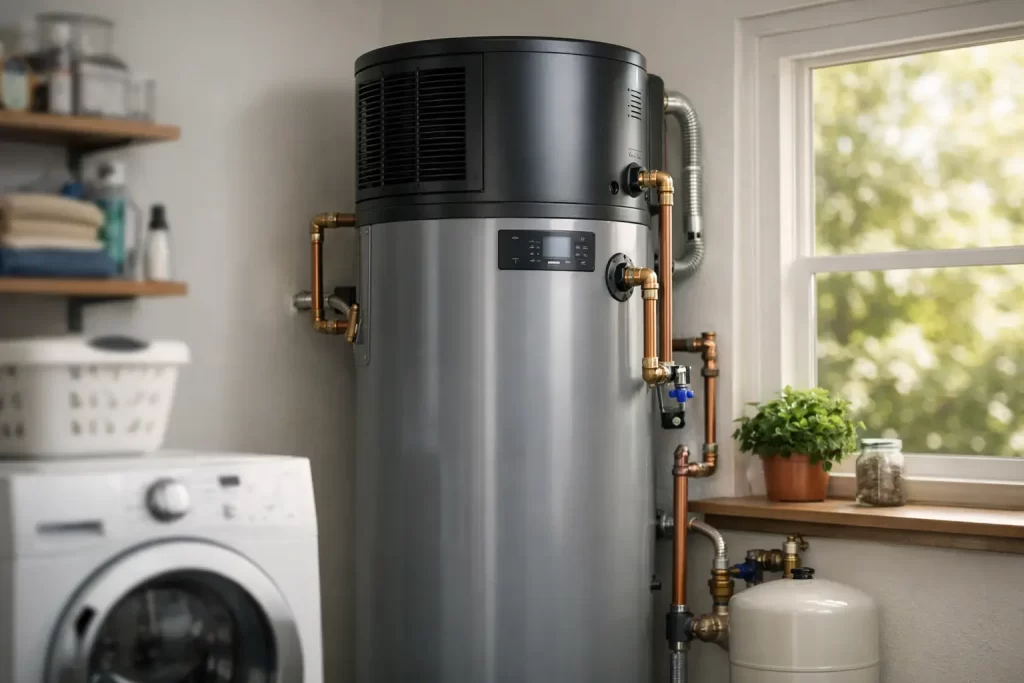
A conventional electric water heater makes heat inside the tank. A heat pump water heater moves existing heat from the surrounding air into the water instead. That difference can significantly reduce the electricity used for hot water, but only if the unit is sized, located, and installed for the way your household actually lives. The best heat pump water heaters are not simply the models with the highest efficiency rating. They are the ones that deliver enough hot water at busy times without creating a noise, drainage, or space problem in your home.
For homeowners and property managers in the Lower Mainland, this is a practical upgrade worth considering when an aging electric tank starts leaking, runs out of hot water, or drives up utility costs. It can also be a good fit for planned renovations and rental-property improvements, particularly when available government or utility incentives help reduce the upfront cost.
What Makes the Best Heat Pump Water Heaters?
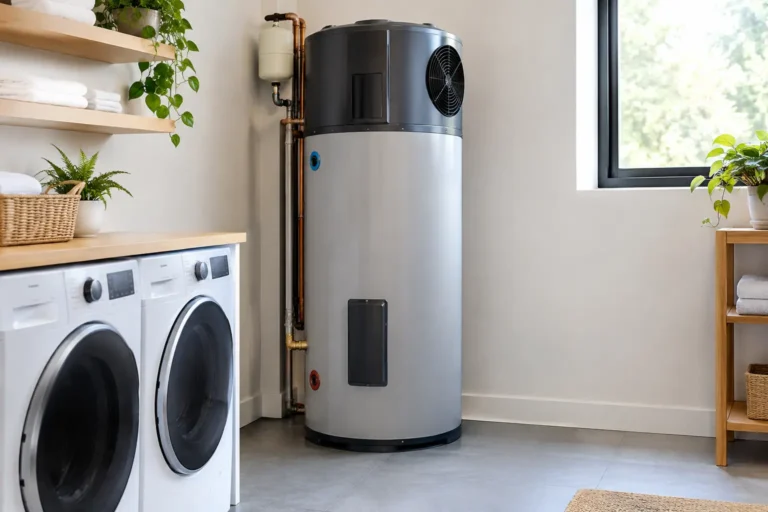
A good heat pump water heater combines a properly sized tank, a strong efficiency rating, dependable controls, and an installation plan that suits the room around it. Unlike a standard tank, it has a small heat pump mounted at the top. It pulls warmth from the air, cools and dehumidifies the space slightly, and transfers that heat into stored water.
This makes the surrounding location part of the equipment decision. A warm utility room, basement, garage, or mechanical area with enough air volume is often a better fit than a tight closet. If the room is small, the installer may need to provide ducting or another approved way to supply and discharge air. The unit also produces condensate, so it needs a proper drain connection or condensate pump.
The most efficient unit on paper is not automatically the best choice. In a household with several morning showers, a dishwasher, and laundry running close together, recovery capacity and tank size matter as much as efficiency. A smaller tank may cost less to buy, yet it can switch to electric resistance backup more often during high demand. That reduces the savings you expected.
Look beyond the headline efficiency number
Compare the Uniform Energy Factor, or UEF, but do not stop there. A higher UEF generally means lower operating costs, but warranty terms, service access, control settings, and available installation space also affect long-term value.
Look for a model with a useful hybrid or high-demand mode. Heat-pump-only operation is usually the lowest-cost setting, while hybrid mode adds electric elements when your household needs faster recovery. Vacation settings can reduce energy use when a property is empty for extended periods. Smart controls can be helpful, but simple, reliable operation should take priority over features you may never use.
Noise is another real-world consideration. The heat pump uses a fan and compressor, similar to a small appliance or dehumidifier. It is generally not disruptive in a basement or garage, but placement near a bedroom, home office, or quiet living space deserves more planning. Ask for the manufacturer’s published sound rating and discuss whether ducting or a different location makes sense.
Choose Tank Size for Your Actual Hot-Water Demand
Tank size is where many water-heater replacements go wrong. Replacing a 50-gallon conventional electric tank with a 50-gallon heat pump model may work well for some homes, but it is not a universal answer. Heat pump operation recovers heat more slowly than a traditional high-wattage electric element, especially in efficiency mode.
A 40- to 50-gallon tank can be suitable for a smaller household with predictable use. Many families of three to four people are better served by a 50- to 65-gallon unit, depending on shower habits and appliance use. Larger families, suites, and properties with multiple tenants may need an 80-gallon tank, multiple units, or a different hot-water strategy altogether.
The right assessment considers more than the number of occupants. A household with two people taking long back-to-back showers can have greater morning demand than a family of four with staggered schedules. Soaking tubs, rain showers, body sprays, frequent laundry, and high-flow fixtures all change the calculation.
For rental buildings and commercial spaces, do not rely on a residential rule of thumb. Peak demand, fixture count, recovery expectations, and tenant disruption need to be reviewed before selecting equipment. An undersized system can create callbacks and complaints even when the equipment itself is functioning correctly.
Installation Conditions That Affect Performance
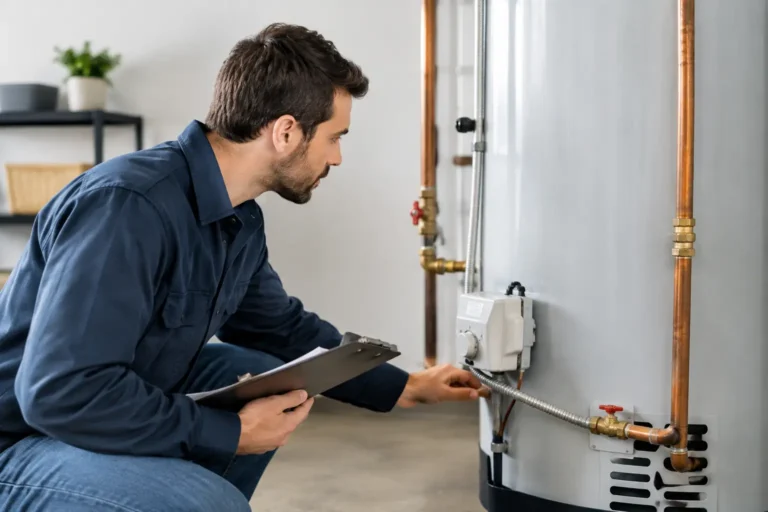
Heat pump water heaters need more planning than a basic tank swap. The tank must have adequate clearance for service and airflow. It also needs a stable electrical supply, correctly sized breakers and wiring, a temperature and pressure relief valve discharge line, and a safe condensate drainage path.
In a cool garage or unconditioned area, performance can drop when temperatures fall. Most modern units are designed to operate across a range of conditions, but their efficiency and capacity vary with air temperature. In a cold climate, installers may recommend a location inside the conditioned envelope, ducting, or a model that can rely on resistance elements when needed. The trade-off is that the unit removes heat from the room, so placing one in a heated basement can slightly increase space-heating demand during winter.
A heat pump water heater also makes a room cooler and drier. That can be welcome in a warm mechanical room, laundry area, or garage. It may be less welcome in a compact finished space where you are already paying to heat the air. There is no one-size-fits-all location, which is why an on-site review is more valuable than choosing solely from a product specification sheet.
Electrical and plumbing work should be coordinated
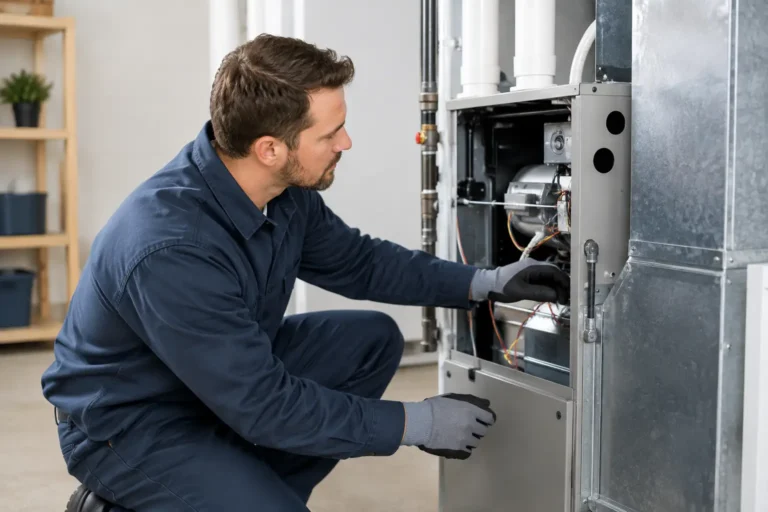
Many replacements use the existing electrical circuit, but that must be confirmed rather than assumed. Panel capacity, wire size, disconnect requirements, and local code all matter. On the plumbing side, the installer should inspect shutoff valves, expansion control where required, drain-pan needs, seismic restraint requirements where applicable, and the condition of the existing piping.
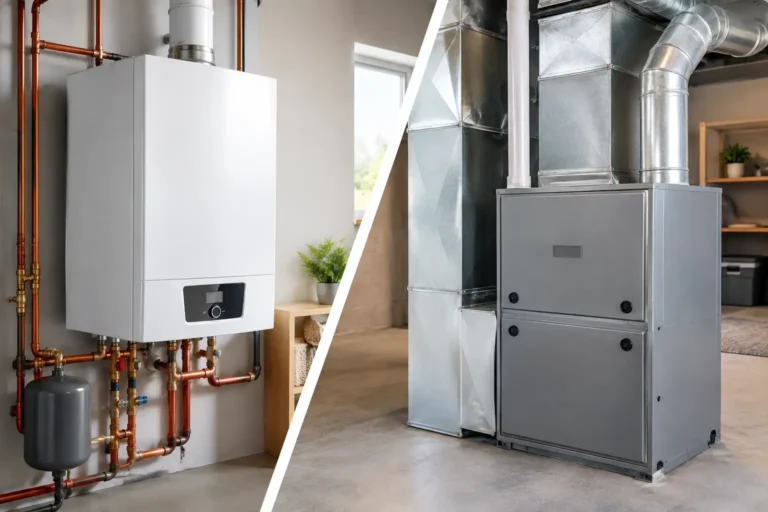
If you are replacing a gas-fired tank, the project may involve electrical upgrades and a plan for the former venting and gas connection. If you are replacing an electric tank, the conversion is often more straightforward, though site conditions still determine the final scope and price. Clear quotes should explain what is included rather than leaving drainage, electrical corrections, or removal work as surprises after installation begins.
Compare Costs, Rebates, and Long-Term Value
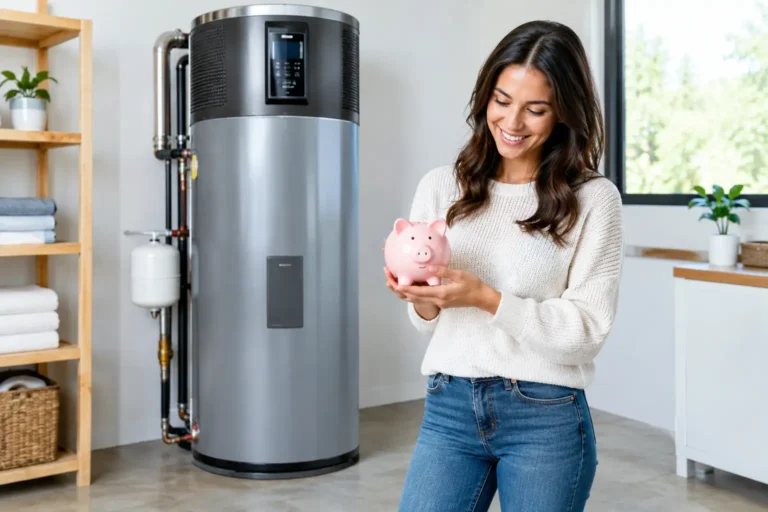
Heat pump water heaters usually cost more upfront than standard electric tanks. The financial case comes from lower operating costs over the equipment’s life, especially in homes with steady hot-water demand. Available rebate programs and government incentives for heat pump water tanks can make the upgrade more attractive, but eligibility rules, approved equipment lists, and application steps can change.
Before approving a replacement, confirm whether the incentive requires a specific efficiency level, proof of installation, pre-approval, or work completed by a qualified contractor. Do not assume every heat pump tank qualifies. Keep invoices, equipment documentation, and any required photographs or permit records until the incentive is complete.
It is also worth comparing the installed cost, not just the tank price. A lower-priced model can become the more expensive option if it requires major electrical work, complex ducting, or extensive changes to create drainage. Conversely, a higher-capacity, better-supported model may be the better value for a busy household because it avoids frequent backup-element operation and hot-water shortages.
When a Heat Pump Water Heater Is Not the Best Fit
This technology is a strong option for many homes, but it is not automatically right for every property. A tight interior closet with no practical airflow solution may make installation complicated. Homes with unusually high, continuous hot-water demand may need larger storage, commercial equipment, or a different system design. If a failed tank needs immediate replacement and the necessary electrical or drainage upgrades cannot be completed safely that day, a temporary plan may be necessary.
Natural gas service, existing venting, household energy rates, available space, and future renovation plans should all be part of the conversation. A qualified contractor can compare the options without forcing every property into the same equipment category.
FlameCo Heating Services can assess the tank, electrical supply, drainage, and installation space before recommending a replacement, with licensed, bonded, and insured work under license LGA202344. The goal is not to sell the biggest tank or the most features. It is to install equipment that delivers dependable hot water, clear operating savings, and a safe setup that can be serviced when you need it.
A water-heater replacement is easiest when it is planned before a leak turns into an emergency. If your current tank is aging, noisy, rusty at the connections, or no longer meeting demand, a site assessment now gives you time to compare the right heat pump options, incentive requirements, and installation costs without making a rushed decision.