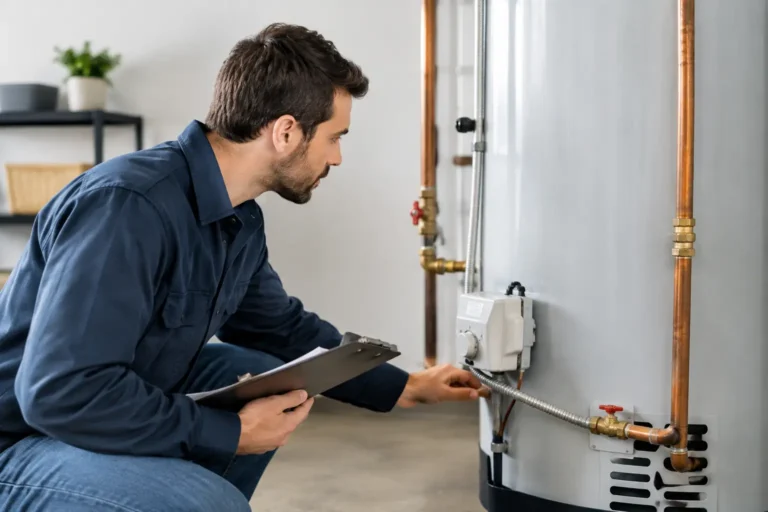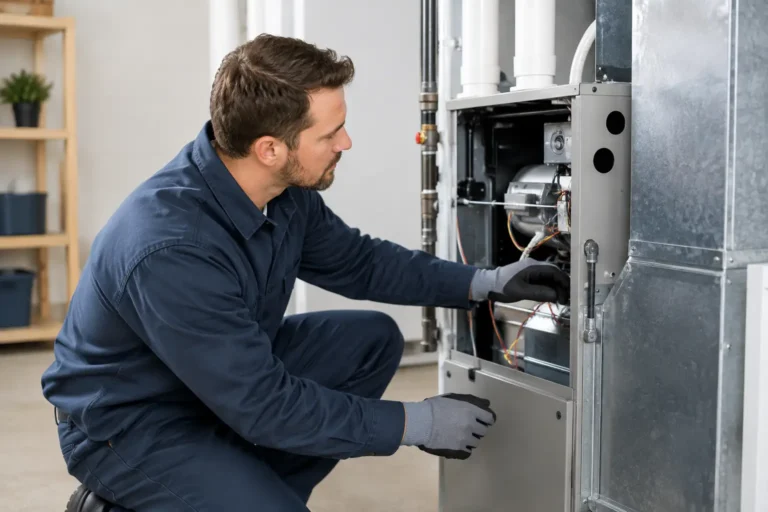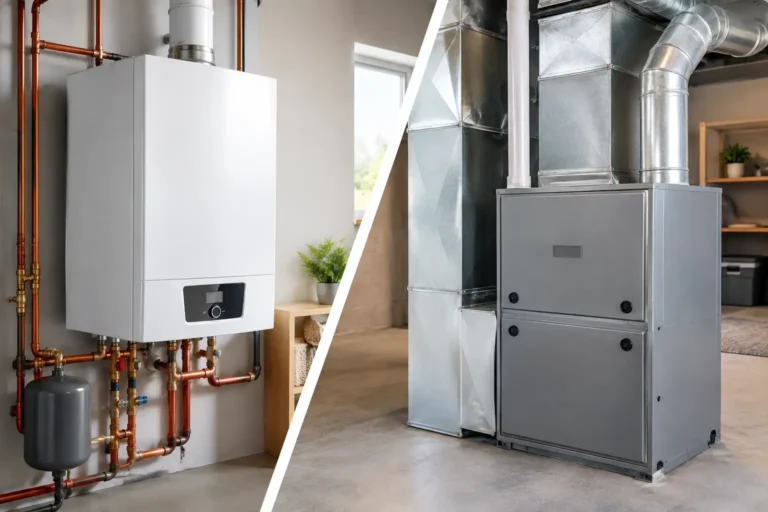
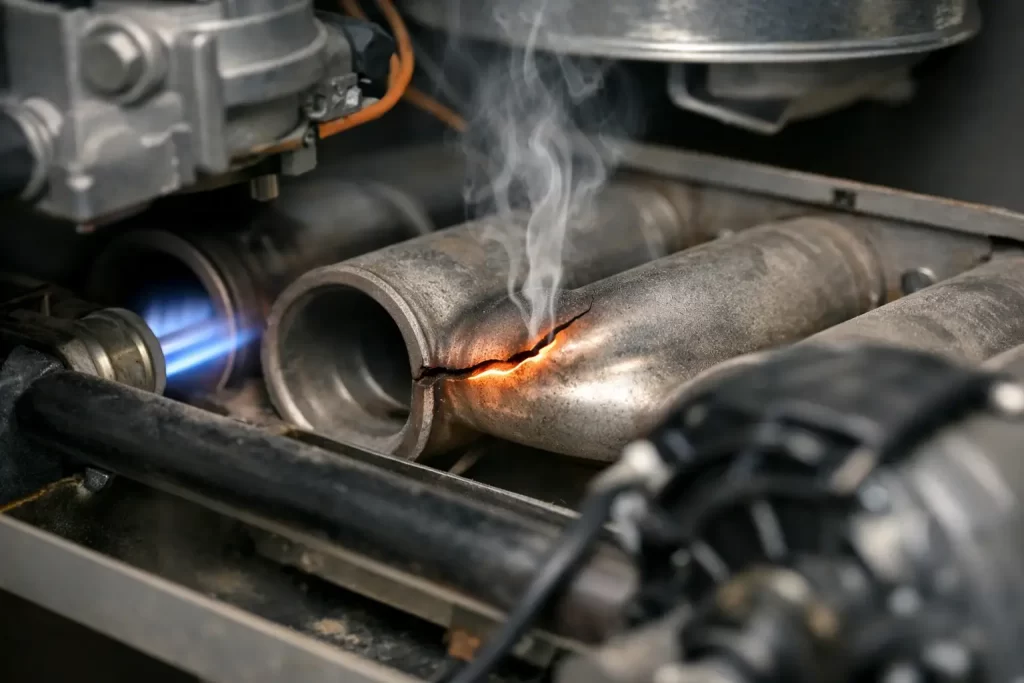
A furnace can still appear to run normally while a serious combustion problem develops inside it. If you are looking for signs a furnace heat exchanger is cracked, treat the situation as a safety concern first, not just another heating repair. A damaged heat exchanger can allow combustion gases to move where they do not belong, potentially including carbon monoxide.
Do not try to diagnose or repair this part yourself. Shut the furnace off if you notice a possible safety issue, make sure your carbon monoxide alarms are working, and arrange a licensed furnace inspection. A qualified technician can test the equipment, identify the actual cause, and explain whether repair or replacement makes more sense.
What a Furnace Heat Exchanger Does
The heat exchanger is the metal chamber or series of passages inside a gas furnace that separates the combustion process from the air circulated through your home. Burners create heat on one side of the metal. Your blower moves household air across the other side, then sends warmed air through the ducts.
That separation matters. Exhaust gases must leave through the venting system, while the air your family breathes stays on the other side of the exchanger. Repeated heating and cooling causes metal to expand and contract over many years. Corrosion, restricted airflow, overheating, improper installation, and neglected maintenance can all shorten the exchanger’s life.
A crack, hole, or failed seam does not always mean carbon monoxide is entering the living space. The risk depends on the type and location of the damage, furnace design, airflow, venting, and combustion conditions. But it does mean the furnace needs professional attention before it is returned to regular service.
Signs a Furnace Heat Exchanger Is Cracked
Most homeowners cannot see the heat exchanger clearly, and many symptoms can also be caused by a dirty burner, blocked vent, failing inducer motor, or another furnace issue. That is why an inspection is necessary. Still, these warning signs should never be ignored.
Carbon Monoxide Alarm Activation
A carbon monoxide alarm is not a furnace diagnostic tool, but an alarm sounding is an emergency warning. Move everyone outside to fresh air immediately, call emergency services or your gas utility as appropriate, and do not reenter until it is safe to do so. Do not silence the alarm and continue using the furnace.
Carbon monoxide has no smell, color, or taste. Symptoms of exposure can include headache, dizziness, nausea, confusion, weakness, chest discomfort, or flu-like feelings that improve when someone leaves the building. If anyone has symptoms, seek medical help right away.
Soot, Scorching, or a Yellow Burner Flame
A properly operating gas burner usually produces a steady blue flame. Yellow, wavering, lifting, or irregular flames can point to incomplete combustion, burner contamination, gas-pressure issues, or an air supply problem. They do not prove a cracked heat exchanger, but they require prompt service.
Soot near the furnace, burner compartment, vent connections, or around supply registers is another concern. Black residue can indicate combustion or venting problems. Turn off the system and have a licensed technician assess the furnace and gas equipment.
Unusual Furnace Odors
A brief dusty smell at the start of heating season can be normal. Persistent burning, metallic, chemical, or exhaust-like odors are not. An odor alone cannot confirm a cracked heat exchanger, especially because carbon monoxide itself has no odor, but it can signal overheating, wiring trouble, a dirty burner, or a venting failure.
If you smell natural gas, leave the building without operating switches, appliances, or vehicles nearby. Call your gas utility or emergency services from a safe location. Do not attempt to locate the leak yourself.
Water Around the Furnace or Rust on Components
High-efficiency furnaces create condensate, so some water-related components are normal. A clogged drain, leaking condensate line, damaged collector box, or failed pressure switch can all cause water where it should not be. Over time, moisture can also contribute to corrosion inside or around the heat exchanger.
Rust flakes, corrosion at seams, or water pooling near the furnace deserve an inspection. The repair may be straightforward, but ignoring moisture can turn a smaller service call into a major equipment failure.
Flame Rollout or Repeated Limit Switch Trips
Flames should remain contained in the burner area. If flames appear to roll out of the burner compartment, or if you see scorching around the furnace cabinet, shut the unit down and call for emergency service. Rollout can occur when exhaust is restricted, the heat exchanger is compromised, burners are dirty, or the furnace has a serious combustion problem.
A furnace that starts, runs briefly, and shuts down repeatedly may be tripping a high-limit safety switch. Restricted filters, blocked returns, dirty blower components, undersized ductwork, and a failing blower can cause this. Chronic overheating puts added stress on the heat exchanger, so repeated shutdowns should not be dismissed as a thermostat issue.
Loud Bangs, Rattles, or Changes in Operation
A loud bang when burners ignite can result from delayed ignition. Rattling may come from loose panels, a failing motor, or deteriorating internal components. These sounds are not a reliable crack test, but a change in normal furnace operation is worth investigating, particularly on an older furnace.
Pay attention if the furnace has become less reliable, rooms heat unevenly, the blower runs excessively, or utility costs rise without a clear reason. Those symptoms may involve airflow, controls, ductwork, or combustion performance. A complete diagnostic visit is more useful than replacing parts based on a guess.
What to Do if You Suspect a Crack
Start with safety. If a carbon monoxide alarm sounds, anyone feels ill, you smell gas, or you see flame rollout, leave the building and get emergency help. Do not restart the furnace until a qualified professional says it is safe.
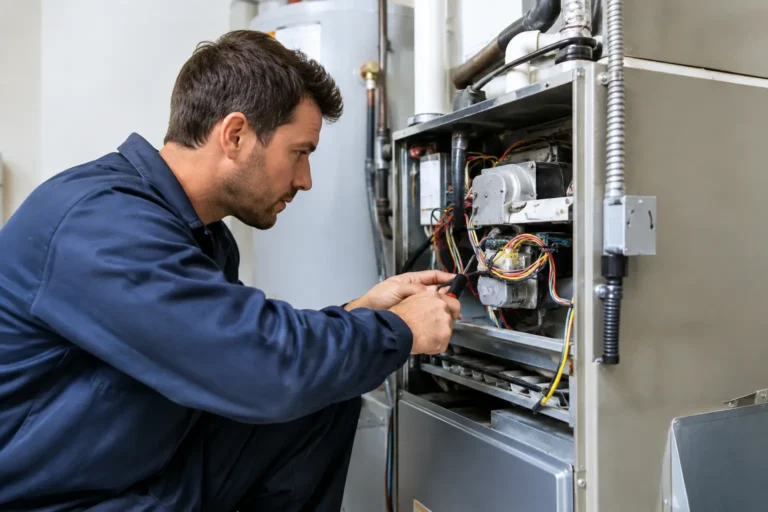
For non-emergency concerns, turn the furnace off at the thermostat and arrange a licensed inspection as soon as possible. Keep the area around the unit clear and do not remove panels or tape over safety switches. A technician may inspect burners and venting, check temperature rise and airflow, test combustion, examine the exchanger using specialized equipment, and verify whether the furnace is operating within manufacturer specifications.
A visual look through an access panel is rarely enough. Some cracks are difficult to access, while surface marks may be mistaken for damage. Proper diagnosis protects you from both missed safety issues and unnecessary replacement recommendations.
Can a Cracked Heat Exchanger Be Repaired?
In most residential furnaces, a cracked heat exchanger is not repaired with a patch or weld. The exchanger operates under intense temperature changes, and a temporary fix may not restore safe, reliable operation. Manufacturers generally treat replacement of the heat exchanger as the proper remedy.
Whether that is practical depends on the furnace. A newer unit with warranty coverage may justify an exchanger replacement. With an older furnace, labor costs, availability of parts, efficiency, condition of the blower and controls, and expected remaining service life all matter. If several major components are aging, furnace replacement can be the more predictable long-term choice.
A clear estimate should separate diagnostic findings, repair options, replacement choices, warranty considerations, and any work needed to bring venting or gas connections up to current requirements. The lowest immediate price is not always the lowest ownership cost, particularly when an older furnace is already using more fuel or requiring frequent repairs.
Prevent Overheating and Catch Problems Earlier
A heat exchanger cannot be made permanent, but routine maintenance reduces avoidable stress. Change or clean filters on schedule, keep supply registers and return grilles open, avoid storing items around the furnace, and address short cycling or weak airflow early. For landlords and property managers, scheduled maintenance also helps document equipment condition and reduce disruptive no-heat calls during cold weather.
Annual professional service is especially valuable for gas furnaces. The technician can inspect combustion, burners, venting, drainage, electrical connections, safeties, blower performance, and temperature rise before small concerns become urgent. Carbon monoxide alarms should also be installed and tested according to local requirements and manufacturer instructions.
When a furnace is found to have a failed heat exchanger, you deserve a direct answer about the safety issue and realistic options for restoring heat. FlameCo Heating Services can provide licensed furnace diagnostics, transparent repair or replacement recommendations, and urgent support for homes and properties across Maple Ridge and the Lower Mainland. The safest next step is simple: stop guessing, keep carbon monoxide protection active, and have the furnace assessed before the next heating cycle.